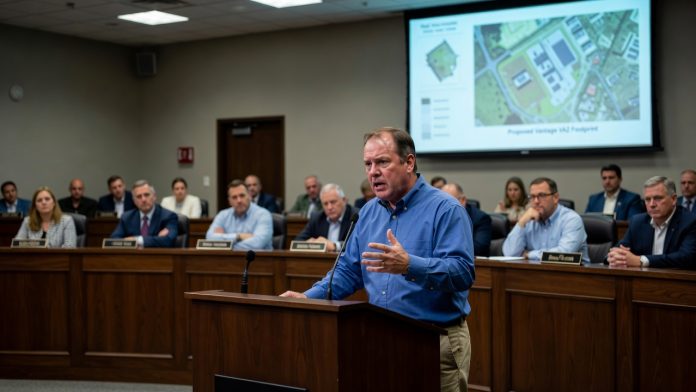
The resident directly addressed the board’s handling of these large-scale facilities. Concerns centered on the lack of thorough review for how such developments affect neighborhoods and quality of life. Supervisor Briskman was specifically called out for decisions that appear to overlook resident input in favor of rapid approvals.
Community members in Loudoun County have long valued the preservation of their residential character. Data center expansions threaten this balance by introducing industrial-scale operations near homes. The speaker urged the board to look around the room and recognize the people they represent instead of distant billionaires.
Prioritizing Local Families Over Corporate Gains
Elected leaders in Virginia counties like Loudoun hold a responsibility to safeguard traditional community structures. When data center projects advance without adequate consideration for noise, traffic, and environmental effects, they erode the trust between supervisors and constituents. The resident’s remarks pointed to a pattern where financial incentives from tech companies overshadow these local realities.
Residents who bought homes expecting a stable environment now face unexpected burdens from nearby facilities. The call for supervisors to conduct their due diligence reflects core principles of accountability and protection of property rights. Such developments should not proceed if they diminish the appeal of living in the county.
The emphasis on hearing from affected individuals like the speaker reinforces the importance of grassroots voices in decision-making. Boards that fail to engage deeply risk alienating the very people who elect them. This approach aligns with values that place family stability and neighborhood integrity above unchecked growth.
The Broader Implications for Virginia Governance
Loudoun County’s experience with data centers serves as a cautionary example for other areas facing similar proposals. Supervisors must weigh the long-term costs to residents against short-term economic promises. The testimony illustrated how one project, Vantage VA2, exemplifies the disconnect between board actions and community needs.
By questioning the focus on profits, the resident highlighted a fundamental tension in local governance. Conservative principles advocate for limited government intervention that still protects citizens from external exploitation. The board’s apparent reluctance to address these impacts directly challenges that standard.
Moving forward, sustained public engagement will be essential to ensure decisions reflect resident priorities. The speaker’s words resonated with calls for transparency and fairness in approving major infrastructure. This event marks another instance where Loudoun County residents assert their stake in shaping the county’s future.
Email the Loudoun County Board of Supervisors at:
Phyllis J. Randall (Chair, At-Large) – Phyllis.Randall@loudoun.gov,
Michael R. Turner (Vice Chair, Ashburn District) – Mike.Turner@loudoun.gov,
Juli E. Briskman (Algonkian District) – Juli.Briskman@loudoun.gov,
Sylvia R. Glass (Broad Run District) – Sylvia.Glass@loudoun.gov,
Caleb Kershner (Catoctin District) – caleb.kershner@loudoun.gov,
Matthew F. Letourneau (Dulles District) – Matt.Letourneau@loudoun.gov,
Kristen C. Umstattd (Leesburg District) – Kristen.Umstattd@loudoun.gov,
Laura A. TeKrony (Little River District) – Laura.TeKrony@loudoun.gov,
Koran Saines (Sterling District) – Koran.Saines@loudoun.gov