Tom Garrett Exposes Flaws in Spanberger's Voting Rights Process
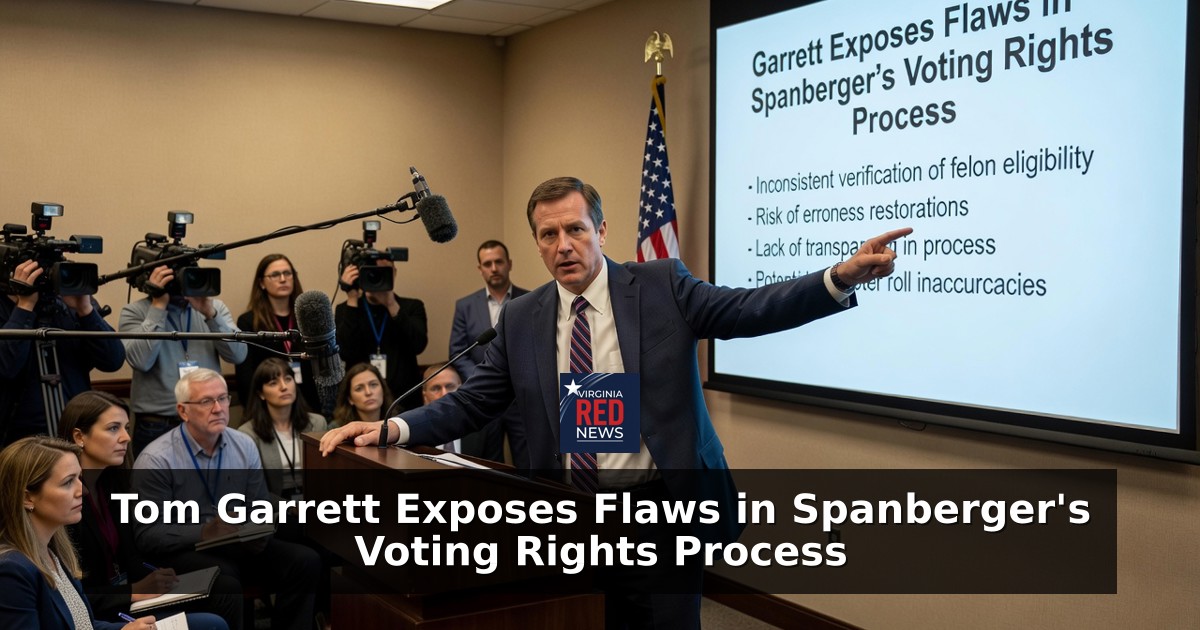
Republican Delegate Tom Garrett has raised serious questions about the integrity of Governor Abigail Spanberger's process for restoring voting rights to felons. In a recent press release, Garrett shared details of a letter sent by the Spanberger administration to an address associated with a deceased dog named Biscuit Rigsby. The letter, dated September 23, claimed to restore voting rights to this individual described as a previously convicted felon.
The constituent involved, according to Garrett, confirmed that Biscuit was his dog who passed away five years earlier. The owner expressed surprise at the communication, noting that the dog had never been convicted of a felony and showed no interest in voting. Garrett emphasized that such an error undermines public confidence in the election system and called for a thorough review of the restoration procedures.
Virginia law requires the governor to personally approve each petition for restoring voting rights to felons after they complete their sentences. This process stands in contrast to the approach taken by former Governor Glenn Youngkin. Spanberger has restored rights to tens of thousands of individuals during her tenure, a scale that has drawn scrutiny from critics concerned about verification safeguards.
Concerns Over Database Accuracy and Past Incidents
The incident involving the dog is not isolated. Earlier in October, Spanberger acknowledged her team was examining cases where voting rights might have been restored to individuals who had passed away. The governor attributed potential issues to conflicting information across multiple databases used in the restoration process. Critics argue that these repeated problems point to systemic weaknesses that could compromise the accuracy of voter rolls.
Garrett stated that regardless of one's views on felon voting rights, Virginians deserve assurance that the governor verifies the recipient is alive and is actually a person. The delegate framed the matter as one of basic governmental competence rather than partisan debate. A spokesperson for Spanberger responded that the office did not restore rights to a dog and that the record involves a person with a date of birth and Social Security number.
A federal judge recently ruled that aspects of Virginia's felon disenfranchisement laws were unconstitutional. This decision has influenced the restoration process, with many cases now pending review. The issue of felon voting rights appears on the ballot in the upcoming midterms, adding urgency to questions about administrative accuracy.
Implications for Election Integrity
Attempts to vote on behalf of another person remain a felony under Virginia law. The letter encouraged participation in democracy as a sacred value, but the misdirected communication has fueled debate over how thoroughly applications are vetted. Garrett's release included photos of the letter and certificate sent to the constituent's address.
The situation highlights broader challenges in managing large-scale restorations. With tens of thousands of rights returned under Spanberger, the volume increases the risk of errors if database cross-checks are insufficient. Conservative voices have long advocated for stricter safeguards to protect the sanctity of the ballot box.
Garrett urged a comprehensive audit of the process to prevent future mistakes. The delegate noted that basic checks for life status and human identity should be non-negotiable. As the midterms approach, these claims continue to circulate among those prioritizing election security.
Calls for Accountability and Review
In his statement, Garrett stressed that the focus should remain on ensuring the governor knows the status of each individual before acting. The constituent described Biscuit as a good dog who is missed, underscoring the personal nature of the error. Spanberger's office maintains that the specific record corresponds to a living person.
The episode comes amid ongoing discussions about Virginia's unique system, where the governor holds sole authority over restorations. This personal involvement by the executive has been both praised and criticized depending on the administration's approach. Previous concerns about deceased individuals receiving rights have prompted internal reviews by Spanberger's team.
As more details emerge, the public awaits further clarification on how the letter reached the wrong address. Garrett's press release positions the matter as a call for improved protocols rather than an attack on the policy itself. Election officials continue to monitor the situation closely ahead of the November vote.
Abigail Spanberger Abigail Spanberger accountability argue challenges concerns convicted delegate Delegate Tom Garrett Election Integrity focus Glenn Youngkin governor individuals Issue person Press Release previous Process Spanberger Tom Garrett Virginia Virginia law vote Voter Voter Rolls Voting
