Virginia Lawmakers Allocate $1 Billion to Backfill Federal Healthcare Cuts, Sparking Overspending Concerns
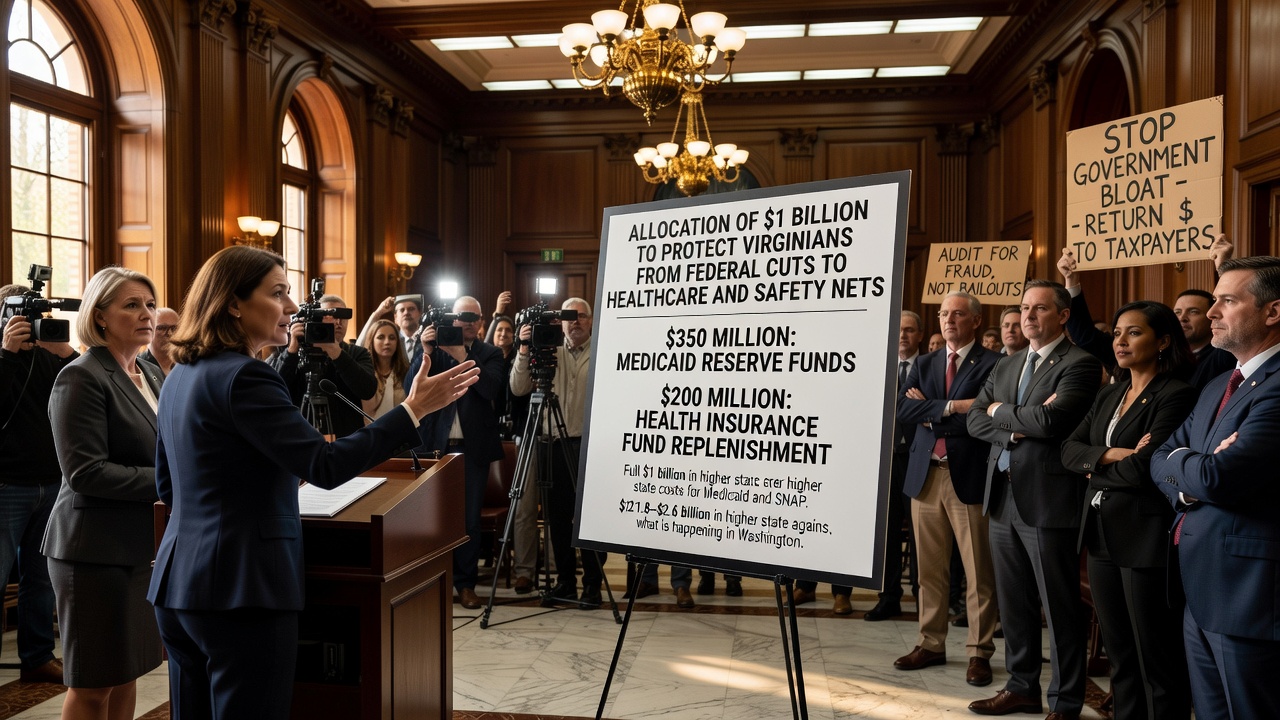
As the federal government finally takes steps to rein in out-of-control spending, Virginia lawmakers are moving aggressively to shift those financial burdens directly onto state taxpayers. Legislators are currently advancing a budget proposal that allocates a staggering $1 billion in reserves for contingency funding to respond to federal funding reductions. This massive expenditure is specifically designed to backfill anticipated cuts to federal safety net programs like Medicaid and the Supplemental Nutrition Assistance Program. For fiscal conservatives, this move represents a troubling continuation of government bloat rather than a necessary step to protect citizens.
The proposed state budget sets aside $350 million specifically for Medicaid reserve funds to absorb the shock of reduced federal matching dollars. Additionally, lawmakers are directing $200 million to replenish the Commonwealth’s health insurance fund, which has seen skyrocketing costs in recent years. State projections indicate that Virginia faces an estimated $1.8 billion to $2.6 billion in higher overall costs for Medicaid and SNAP due to these federal adjustments. Instead of using this moment to audit these programs for rampant waste and fraud, state leaders are simply throwing more taxpayer money at the problem.
Justifying the Billion-Dollar Price Tag
Proponents of the massive spending package argue that the state must step in to prevent vulnerable populations from losing their benefits. Delegate Amy Laufer defended the billion-dollar allocation by stating that lawmakers are simply responding to what is happening in Washington. She emphasized that the state is trying to make sure Virginia is prepared for the financial fallout, noting that the legislature is not talking enough about the impending changes. However, critics argue that this reactive spending fails to address the underlying inefficiencies within prenatal and postpartum care programs that drive up costs in the first place.
Delegate Katrina Callsen echoed the sentiment of her colleagues, asserting that protecting health insurance remains one of the biggest priorities for the state government. She pointed to the perceived chaos in the nation’s capital as a primary reason for the state to hoard these massive reserve funds. Callsen claimed that lawmakers are trying to be prudent stewards of public money while ensuring that people do not lose their health coverage. Fiscal watchdogs strongly disagree with this assessment, arguing that true prudent stewardship requires shrinking the budget and returning excess revenue to hardworking taxpayers.
The True Cost of Expanding Safety Nets
Government estimates suggest that between 100,000 and 300,000 Virginians could lose health care coverage under the new federal laws. While this statistic is frequently cited to justify the $1 billion state intervention, it ignores the fact that many individuals were kept on Medicaid rolls during the pandemic long after their eligibility expired. The federal rollback is largely an effort to remove ineligible participants and restore basic fiscal sanity to a system plagued by overspending. By rushing to replace federal dollars with state funds, Virginia is effectively subsidizing a broken system that desperately needs structural reform.
Programs like SNAP and Medicaid have historically been highly susceptible to administrative errors, fraudulent claims, and widespread bureaucratic inefficiencies. When the federal government reduces its financial footprint, states are presented with a prime opportunity to tighten eligibility requirements and root out systemic fraud. Unfortunately, the current legislative approach in Richmond completely bypasses any meaningful effort to streamline these bloated departments. Taxpayers are now on the hook for a billion-dollar contingency fund that offers zero guarantees of improved operational efficiency or reduced long-term spending.
Protecting the Virginia Taxpayer
Conservative advocates maintain that state government must learn to live within its means rather than constantly expanding its financial obligations. Whenever federal funding dries up, the immediate reflex of state lawmakers should not be to raid the state treasury to maintain artificially inflated program levels. If the state can afford to stash away $1 billion for contingency reserves, those funds would be better utilized by providing broad-based tax relief to Virginia families facing historic inflation. Reducing the overall tax burden stimulates local economies much more effectively than funneling cash into massive state-run health bureaucracies.
The debate over this $1 billion allocation highlights a fundamental ideological divide regarding the proper role and size of state government. As federal purse strings tighten, Virginia must decide whether to embrace fiscal discipline or continue down a path of endless taxpayer-funded bailouts for expansive entitlement programs. True conservative governance demands that every single dollar is scrutinized to eliminate waste, prevent fraud, and ultimately reduce the size of the state budget. Until lawmakers prioritize taxpayer savings over bureaucratic expansion, hardworking Virginians will continue to bear the heavy financial burden of these unchecked safety nets.
Democrats Government Virginia Aaron Rouse Abigail Spanberger Adam Ebbin Adele McClure Alex Askew Alfonso Lopez Amy Laufer Angelia Williams Graves Anne Tata Atoosa Reaser Barbara Favola Barry Knight Betsy Carr Bill DeSteph Bill Wiley Bonita Anthony Briana Sewell Bryce Reeves Buddy Fowler Budget Charlie Schmidt Charniele Herring Chris Runion Christie Craig Christopher Head Cia Price Citizens Cliff Hayes Creigh Deeds Dan Helmer Danica Roem Danny Diggs David Marsden David Reid David Suetterlein Debra Gardner Delores McQuinn Delores Oates Destiny LeVere Bolling Don Scott Elizabeth Bennett-Parker Elizabeth Guzmán Ellen McLaughlin Emily Jordan Eric Phillips Eric Zehr Fraud Garrett McGuire Glen Sturtevant Gretchen Bulova Hillary Kent Holly Seibold ICE Inflation Irene Shin Israel O'Quinn Jackie Glass Jas Jeet Singh Jason Ballard Jay Leftwich Jeion Ward Jennifer Boysko Jennifer Carroll Foy Jeremy McPike Jessica Anderson John McAuliff Joseph McNamara Josh Thomas Joshua Cole Justin Pence Kacey Carnegie Kannan Srinivasan Karen Hamilton Karen Keys-Gamarra Karrie Delaney Kathy Tran Katrina Callsen Keith Hodges Kelly Convirs-Fowler Kimberly Pope Adams Lamont Bagby Lashrecse Aird Laura Cohen Lee Ware Leslie Mehta Lily Franklin Lindsey Dougherty Louise Lucas Luke Torian Luther Cifers Madison Whittle Mamie Locke Marcus Simon Margaret Franklin Mark Downey Mark Obenshain Mark Peake Marty Martinez May Nivar Michael Feggans Michael Jones Michael Webert Michelle Maldonado Mike Cherry Mitchell Cornett Nadarius Clark NICOLE COLE Otto Wachsmann Patrick Hope Paul Krizek Phil Hernandez Phillip Scott Rae Cousins Richard Stuart Rip Sullivan Robert Bloxom Rodney Willett Rozia Henson Russet Perry Ryan McDougle Saddam Salim Safety Sam Rasoul Schuyler VanValkenburg Scott Surovell Scott Wyatt Shelly Simonds Stacey Carroll Stella Pekarsky Tammy Mulchi Tara Durant tax relief Taxpayers Terry Austin Terry Kilgore Tim Griffin Timmy French Todd Pillion Tom Garrett Tommy Wright Tony Wilt Travis Hackworth Virgil Thornton Virginia Virginia House of Delegates Virginia Senate Vivian Watts Wendell Walker Will Davis Will Morefield William Stanley Wren Williams