Virginia Democrats Direct Funds to LGBT Caucus
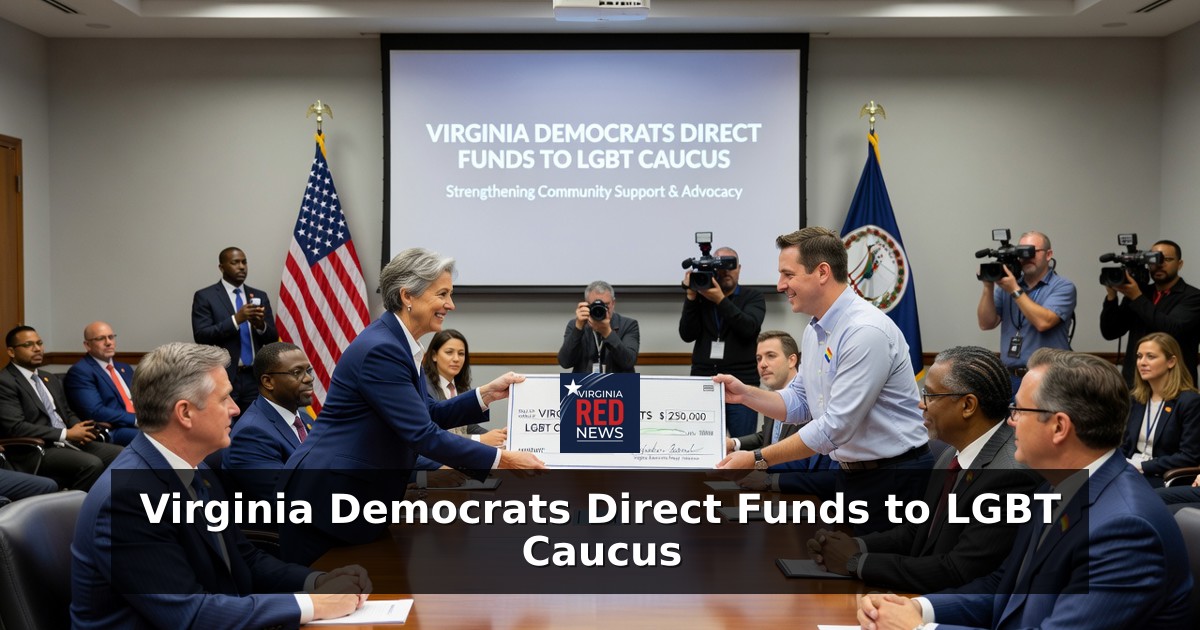
RICHMOND — The Democratic Party of Virginia transferred $2,500 to the LGBT Caucus of the Democratic Party of Virginia on July 2, 2026, adding another party-level infusion to a Richmond-based advocacy committee that has drawn more than $21,000 from the state party over multiple years, according to campaign-finance records summarized in draft reporting on the gift.
The funds are designated for use in connection with a Virginia candidate, placing the transfer inside the ordinary machinery of party caucus politics rather than a standalone independent expenditure. In Virginia’s disclosure system, committees and caucuses routinely move money to underwrite endorsements, voter contact, and candidate support aligned with their membership priorities. The LGBT Caucus operates as a Democratic advocacy committee focused on issues relevant to its members inside the party structure and has endorsed multiple Democratic candidates in recent cycles.
Beyond party transfers, the caucus has made direct contributions to candidates, including Victoria Luevanos for Senate, and has received support from entities such as Va Partisans and various county Democratic committees. Individual donors also appear in the caucus’s receipts, reflecting a mix of institutional and grassroots funding typical of identity and issue caucuses that sit alongside the official state party.
Republicans watching the filings will read the July transfer as further evidence that Virginia Democrats continue to prioritize organized identity caucuses as campaign infrastructure. Democrats will call it routine party housekeeping — a small, disclosed gift to a caucus that already sits inside the Democratic tent. Both readings can be true at once: $2,500 is not a transformative sum in statewide politics, but the cumulative $21,000-plus from the state party signals sustained institutional backing rather than a one-off gesture.
Caucus politics matter most in nomination fights and turnout operations where motivated constituencies can tip low-turnout primaries or narrow general-election margins in Northern Virginia and urban legislative districts. A caucus that endorses, writes small checks, and mobilizes volunteers can amplify party messaging without replacing the larger party committees that still dominate television and mail. For candidates, the value is often the endorsement and volunteer network as much as the dollar amount.
Virginia’s campaign-finance law makes these transfers visible. Unlike dark-money channels, party-to-caucus and caucus-to-candidate moves show up in VPAP-style databases that journalists and activists scrape after each reporting period. That transparency is why a mid-summer $2,500 line item can become a news brief: the paper trail exists, the purpose is stated, and the pattern of prior gifts supplies context.
Critics of identity caucuses argue they fragment party coalitions and elevate litmus tests over kitchen-table issues. Supporters argue they bring underrepresented voters into the process and force major parties to compete for coalitions that used to sit on the sidelines. The July 2 transfer does not settle that argument. It does document that the Democratic Party of Virginia continues to write checks to its LGBT Caucus as part of candidate-connected work heading into the next round of Commonwealth contests.
As 2027 House and Senate races approach, expect more of these mid-sized transfers — from parties to caucuses, from trade associations to PACs, from donors to district committees. Each one is a small tile in a larger mosaic of who funds Virginia’s permanent campaign. This tile shows the state Democratic Party still investing, in disclosed increments, in a caucus that has become a durable part of its Richmond infrastructure. Looking ahead, the practical test for the caucus is whether July’s party money translates into measurable field work — volunteer lists, early endorsements, and candidate training — before filing deadlines harden the 2027 map. Party transfers that sit idle in a bank account are optics; party transfers that put canvassers on doors are infrastructure. Donors and party leaders who continue to fund the caucus will eventually ask for that distinction in results, not press releases.
Virginia’s odd-year calendar rewards organizations that stay warm between presidential spikes. A caucus that only wakes up in October is a mailing list. A caucus that receives steady party support in July can spend August building the relationships that decide narrow House seats in Richmond, Norfolk, and the inner suburbs. The $2,500 gift is a data point in that longer story of whether Democrats treat identity caucuses as seasonal props or as year-round machinery.
Richmond is an independent city in the Richmond region.
Norfolk is an independent city in Hampton Roads.
Norfolk Richmond 2026 argue Candidates City of Norfolk City of Richmond committee Democrats district Donation Elections general elections House Law primaries Process Republicans Senate Supporters table transparency Virginia Virginia AFL-CIO Volunteer Voter