Warner Stands Firm on Israel Alliance Against Smear Campaigns
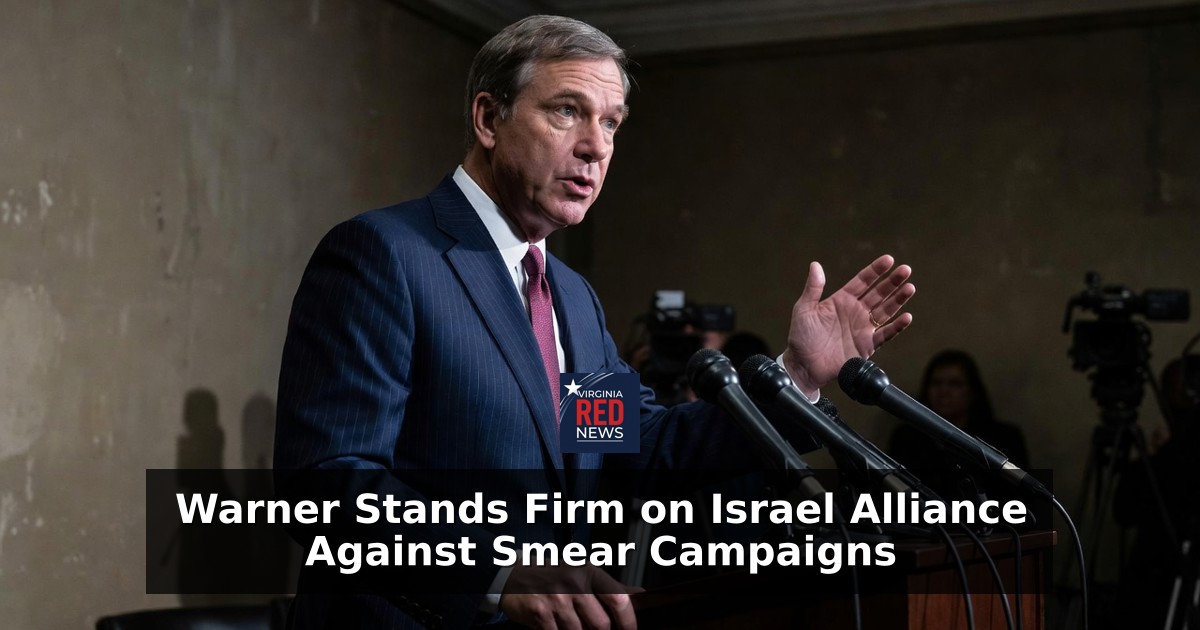
Senator Mark Warner of Virginia has firmly rejected accusations that financial support from pro-Israel organizations compromises his judgment on Middle East policy. In a recent exchange, Warner addressed claims that roughly $600,000 from AIPAC and nearly $880,000 from broader pro-Israel groups, figures drawn from Open Secrets data, somehow purchase his votes. He insisted that voters hire elected officials to exercise independent judgment and that no donor buys his ballot. Warner made clear that constituents retain the right to remove him from office if they disagree, underscoring a core principle of accountability that conservatives have long championed.
The Virginia Democrat, who serves as vice chair of the Senate Intelligence Committee, pushed back against the notion that campaign contributions automatically equal policy capture. He noted that he also accepts support from Muslim American groups and refuses to apply litmus tests to legitimate donors. Only truly outrageous actors would be disqualified, he indicated. This stance aligns with the conservative view that free political association and open fundraising remain essential to representative government rather than evidence of corruption.
Warner went further by criticizing AIPAC itself for occasionally blurring the line between support for the State of Israel and endorsement of every action by its elected government. He called that conflation a disservice to Israel. Conservatives who prize moral clarity can appreciate the distinction while still recognizing that a strong bilateral relationship with the Jewish state serves enduring American interests in intelligence sharing, counterterrorism, and regional stability.
**Defending a Strategic Ally Against False Narratives**
Support for Israel has long rested on shared democratic values, advanced military cooperation, and the simple recognition that a secure Jewish state deters larger threats from Iran and its proxies. Conservative principles hold that America should stand with allies who face existential dangers from terrorist organizations rather than indulge rhetorical excesses that label defensive wars as genocide. Warner’s refusal to accept the premise that his record stems from donor pressure directly challenges that corrosive framing.
Open Secrets tallies confirm Warner ranks among the higher recipients of pro-Israel PAC money among Senate Democrats, yet the same databases show contributions flowing to members of both parties. Republicans have increasingly backed AIPAC in recent cycles precisely because the organization defends Israel’s right to exist and to defend its citizens. That bipartisan financial pattern undercuts claims of one-sided capture and instead reflects broad American consensus on the strategic value of the alliance.
Warner emphasized that accusations of vote-buying surface constantly in politics and that he resents them. He reiterated that people hire him to do what he believes is right. This language echoes the conservative insistence on personal responsibility and constitutional duty over identity-based pressure campaigns. Elected officials swear an oath to the Constitution, not to any foreign capital or domestic lobby, and Warner’s public rejection of the opposite claim reinforces that hierarchy.
**Political Funding and the Reality of Representation**
Campaign finance remains a lawful feature of American elections. Groups that organize around national security, religious liberty, or alliance commitments have every right to support candidates who share those priorities. Conservatives reject the selective outrage that treats pro-Israel dollars as uniquely suspect while ignoring parallel fundraising from other ethnic, religious, or ideological communities. Warner’s simultaneous acceptance of Muslim American contributions illustrates the point: diverse support does not automatically produce contradictory policy.
Critics who invoke the word genocide in connection with Israel’s defensive operations against Hamas ignore the charter, tactics, and stated goals of that terrorist group. Conservative moral reasoning begins with the distinction between a liberal democracy protecting its people and an organization that deliberately targets civilians and embeds military assets among them. Warner’s willingness to separate support for Israel from automatic approval of every cabinet decision still leaves room for the larger truth that Israel remains a frontline partner against radical Islamist networks.
The senator’s role on the Intelligence Committee gives him access to classified assessments of Iranian nuclear ambitions, Hezbollah rocket stockpiles, and Hamas tunnel infrastructure. Those realities, not donor checks, shape sober policy. Conservatives who prioritize hard power and clear-eyed threat analysis welcome any Democrat prepared to resist fashionable narratives that weaken America’s most reliable Middle Eastern ally.
**Accountability Remains with Virginia Voters**
Warner correctly noted that voters can fire him. That reminder returns power to the citizens of Virginia rather than to media interrogators or activist organizations. Conservative governance theory has always located ultimate authority in the electorate, not in permanent bureaucratic or advocacy classes. When officials state that donations do not dictate votes, they reaffirm the same principle.
AIPAC’s evolution toward heavier Republican financial backing reflects growing recognition on the right that Israel’s security is inseparable from broader Western interests. Energy routes, technology partnerships, and joint missile-defense projects such as Iron Dome deliver concrete benefits to American taxpayers. Framing those relationships as mere products of lobbying insults both the strategic logic and the moral case for standing with a fellow democracy.
Warner’s comments also highlight the danger of treating every policy disagreement as proof of corruption. Healthy debate over specific Israeli government decisions can occur without impugning the fundamental legitimacy of the U.S.-Israel relationship. Conservatives maintain that such debate should rest on facts, history, and national interest rather than on inflated casualty rhetoric or conspiracy theories about dual loyalty.
In the end, the exchange underscores a timeless conservative conviction: character and judgment matter more than the source of legal campaign funds. Senator Mark Warner asserted that he answers to the people who elect him and to his own assessment of right and wrong. That assertion deserves respect across party lines, especially when it defends an alliance that has advanced American security for generations. Virginia voters will ultimately decide whether his record matches his words, preserving the accountability that free societies require.