Virginia Conservatives Stand Firm Against Shield Bill Threat to Life and Law
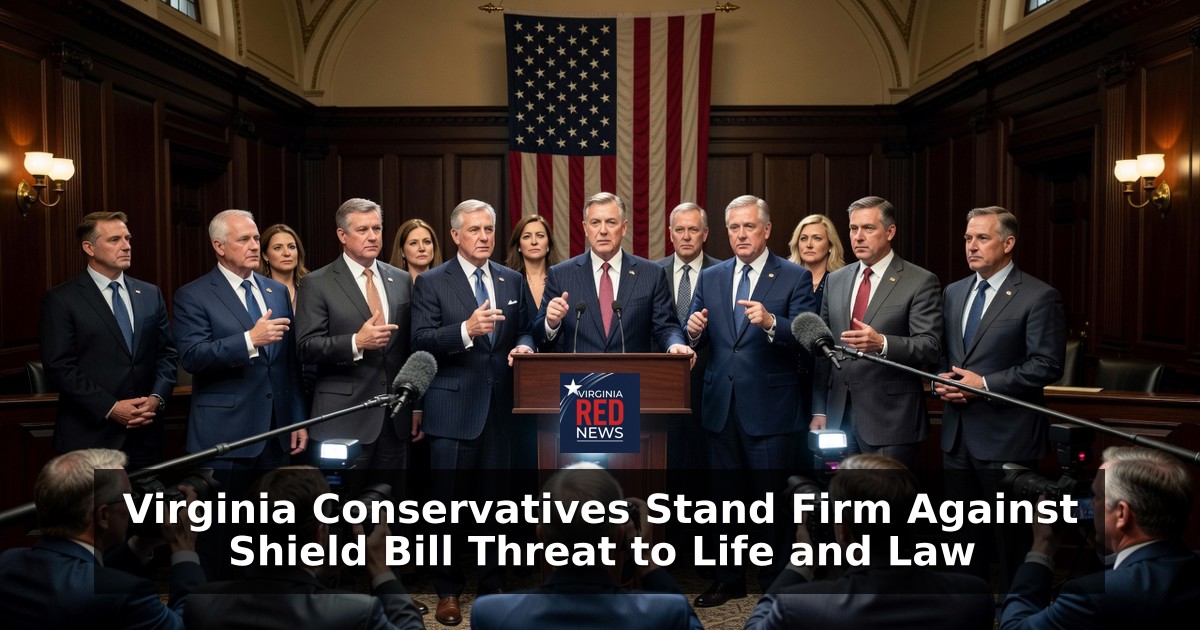
Virginia conservatives are raising strong objections to the so-called Shield Bill, viewing it as a dangerous measure that would entrench abortion access at the expense of the unborn and the Commonwealth's longstanding values. Delegate Simon has pushed the legislation as necessary to protect women's healthcare rights and to block other states from extending their laws into Virginia. Pro-life Republicans counter that true healthcare never includes ending an innocent human life and that the bill would turn Virginia into a sanctuary for procedures many citizens find morally repugnant. They insist the measure undermines the basic principle that every child deserves legal protection from conception. Family-focused lawmakers stress that conservative morals demand defending the vulnerable rather than shielding those who perform abortions.
The bill's supporters claim it safeguards providers and keeps Virginia as a holdout for abortion access amid restrictions elsewhere. Conservatives reject that framing outright and argue it ignores the scientific reality that life begins at conception. They point to the growing number of states that have chosen to protect unborn children after the overturning of Roe v. Wade as evidence of a moral awakening across America. In their view, Virginia should join that movement instead of resisting it. Republican voices emphasize that limited government still carries a duty to protect those who cannot protect themselves, starting with the child in the womb.
Concerns about other states criminalizing certain procedures and seeking to apply their statutes across borders have been cited by the bill's backers. Conservatives respond that respect for federalism and the rule of law requires Virginia to honor legitimate state authority rather than nullify it through shield provisions. They note that interstate comity has long been a cornerstone of American governance and that deliberately obstructing sister states' pro-life laws sets a reckless precedent. Lawmakers aligned with traditional values warn that such legislation invites legal chaos and erodes public trust in equal application of the law. Protecting abortion providers from accountability, they say, places ideology above justice.
At the heart of the conservative case lies the unchanging moral conviction that abortion ends a human life and weakens the family unit that forms the bedrock of society. Advocates for the Shield Bill speak of reproductive rights, yet Republicans insist the right to life is the first and most fundamental right. They highlight data showing many women face pressure, lack of support, or incomplete information when considering abortion, and they call for policies that offer real alternatives such as adoption and maternal assistance. Virginia's conservative leaders argue the Commonwealth should invest in crisis pregnancy resources and parental empowerment rather than legal shields for abortion facilities. This approach, they maintain, aligns with both compassion and responsibility.
Delegate Simon's arguments have focused on maintaining Virginia's status as a state that protects abortion access. Conservatives see that goal as a profound misreading of the public will and of enduring ethical standards. Polling within Republican circles and among faith communities consistently shows deep opposition to expansive abortion policies, especially those that reach into later stages of pregnancy. Party officials stress that voters who elected them expect defense of life, not its further erosion. They warn that passage of the Shield Bill would signal to families that Virginia no longer prioritizes the next generation.
The legislation also raises practical questions about medical standards and the integrity of the healthcare profession. Conservative physicians and ethicists have long held that medicine exists to heal, not to destroy. By creating special protections for abortion providers against out-of-state actions, the bill would elevate one controversial procedure above ordinary legal norms. Republicans argue this special treatment distorts the practice of medicine and invites abuse. They call instead for transparent reporting, informed consent requirements, and support for doctors who refuse to participate in abortions on moral grounds.
Looking ahead, Virginia's Republican caucus and allied pro-life organizations are mobilizing to defeat the measure and to advance bills that affirm the dignity of every human being. They frame the debate as a clear choice between a culture of life and a culture of convenience. Community leaders in churches, civic groups, and county Republican committees are urging citizens to contact their legislators and to demand votes that reflect traditional morals. The Shield Bill, in their assessment, fails that test completely. Conservatives remain confident that the Commonwealth's people still value life, family, and ordered liberty over radical expansions of abortion policy.
In the end, the controversy surrounding the Shield Bill reveals a deeper divide over what kind of society Virginia intends to be. Republican lawmakers and grassroots activists insist the answer must be one that protects the unborn, respects the laws of other states, and upholds the moral heritage that has sustained free people for generations. They reject any claim that safeguarding abortion access equates to progress. Genuine progress, they argue, lies in welcoming every child and strengthening the families who raise them. The fight over this legislation will test whether Virginia still holds to those enduring conservative principles.
abortion access Amidst argue bill Civil Controversy healthcare legal protection necessity protecting Shield shield bill state laws subcommittee Supporters Virginia women's women's healthcare