House of Delegates: Josh Cole Pushes HB 702 Firearm Return Program
HB 702, which advanced through committee and was referred to Appropriations earlier in the session, seeks to formalize these return initiatives across Virginia. Supporters like Cole argue that the change in terminology better reflects the program’s intent, allowing citizens to turn in unwanted firearms in a safe and organized manner. However, critics contend that this represents a subtle expansion of government involvement in firearm ownership, potentially laying the groundwork for broader confiscation efforts.
The bill’s substitute version, debated in January 2026, was described by the Virginia Shooting Sports Association as creating a ‘give back’ program without providing compensation equivalent to the firearms’ value. This lack of fair market reimbursement raises concerns among Second Amendment advocates, who view it as an uncompensated push for citizens to surrender property. National Association for Gun Rights highlighted HB 702 as part of a dangerous package during a reconvened session in late April 2026, alongside measures like HB 217 for assault weapons restrictions, HB 871 for storage requirements, and HB 1525 for universal background checks.
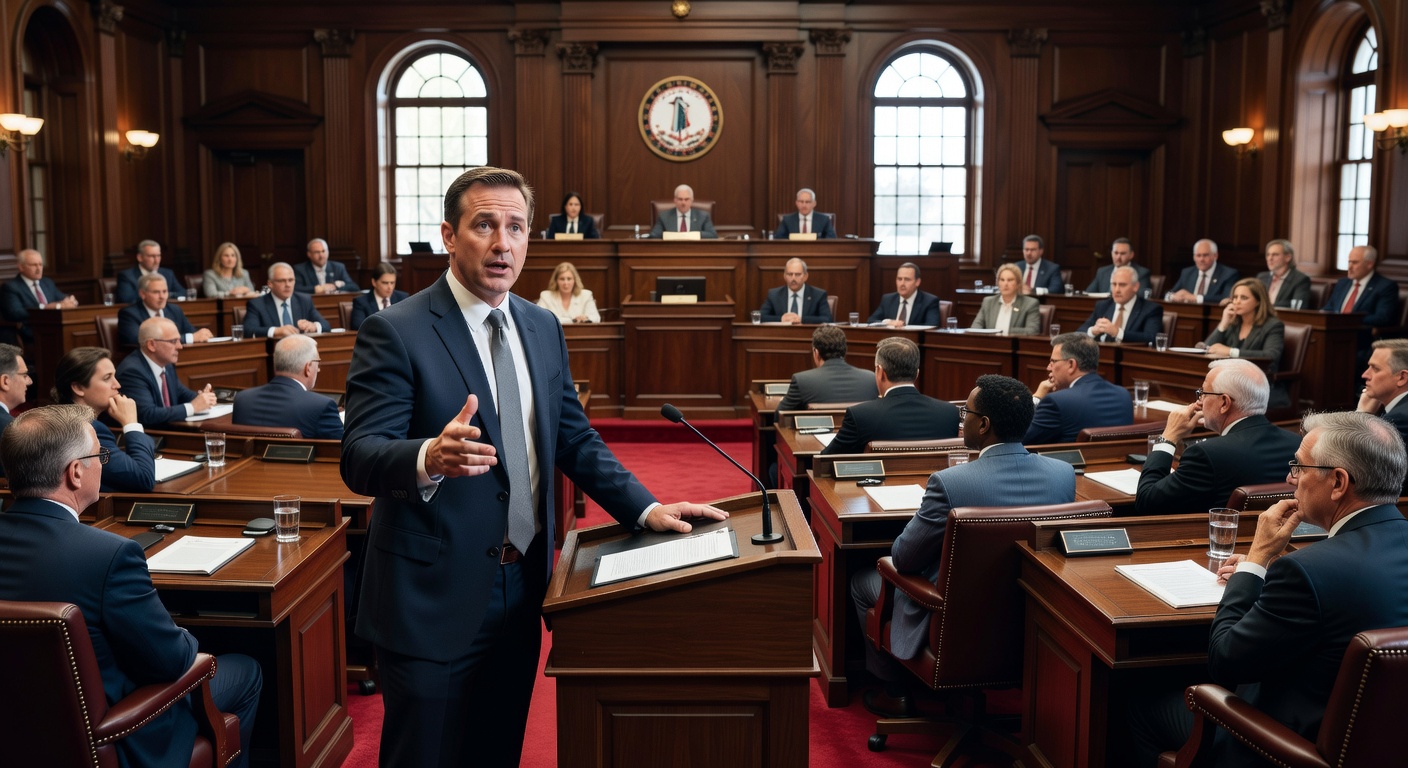
Cole’s floor speech underscored the need for local law enforcement to enforce these return programs, framing it as a public safety measure. Overlays from session footage captured phrases such as ‘enforce local law agencies to a firearm return program,’ ‘individuals to relinquish firearms,’ and ‘structured local program.’ He called on the House to adopt amendments for clarity and accuracy throughout the bill, insisting that participation remains voluntary.
From a Republican standpoint, such initiatives fail to address root causes of violence while burdening taxpayers and infringing on constitutional rights. Data from similar programs nationwide shows they primarily collect outdated or inherited firearms from law-abiding citizens, leaving criminals unaffected. Studies indicate little impact on shootings, homicides, or suicides, as those engaged in illegal activities do not participate. Instead, these efforts divert resources from effective crime-fighting strategies like targeting illegal trafficking and prosecuting violent offenders.
Virginia’s legislative landscape has seen repeated attempts to impose gun controls, with Democrats pushing bills that redefine common semi-automatic rifles, pistols, and magazines as prohibited. HB 702 fits into this pattern, potentially enabling future mandates under the guise of voluntariness. Republicans have warned that grandfather clauses in related bills like HB 217 offer no real path for legal transfer or sale, effectively amounting to confiscation on a timeline.
Delegate Cole, a Democrat representing a district in northern Virginia, has a history of supporting restrictive measures. His advocacy for HB 702 comes amid a broader Democratic agenda that includes bans on sales, transfers, manufacturing, and importation of certain firearms effective July 1, 2026. Pro-gun organizations like the NRA and Virginia Shooting Sports Association have mobilized against these efforts, stressing that law-abiding Virginians bear the brunt while criminals evade compliance.
The push for HB 702 also coincides with concerns over exemptions for lawmakers from their own gun laws and the ineffectiveness of urban-focused policies in Democrat-led cities plagued by gun violence. Critics argue that mandating local agencies diverts police from patrol duties to administrative buyback logistics, yielding negligible safety gains.
As the General Assembly reconvened to consider amendments proposed by figures like Abigail Spanberger, HB 702 stood out for its potential to normalize government-facilitated firearm surrenders. Republicans view this as an incremental erosion of the Second Amendment, designed to condition the public to government oversight of personal firearms. With no empirical evidence supporting reduced violence, the bill exemplifies policy driven by optics rather than outcomes.
Virginia’s gun owners, hunters, and sportsmen face a clear choice: defend their rights against expanding restrictions or risk further encroachments. HB 702’s progression signals Democrats’ unrelenting pursuit of control, even as real threats like illegal guns in criminal hands persist unchecked.
Source: Field reports and eyewitness accounts.
Democrats Government Abigail Spanberger Adele McClure Alex Askew Alfonso Lopez Amy Laufer Anne Tata Atoosa Reaser Barry Knight Betsy Carr Bill Wiley Bonita Anthony Briana Sewell Buddy Fowler Charlie Schmidt Charniele Herring Chris Runion Cia Price Cliff Hayes Constitution Crime Dan Helmer David Reid Debra Gardner Delores McQuinn Delores Oates Democrats Destiny LeVere Bolling Don Scott Elizabeth Bennett-Parker Elizabeth Guzmán Ellen McLaughlin Eric Phillips Eric Zehr Garrett McGuire Gretchen Bulova Hillary Kent Holly Seibold Irene Shin Israel O'Quinn Jackie Glass Jas Jeet Singh Jason Ballard Jay Leftwich Jeion Ward Jessica Anderson John McAuliff Joseph McNamara Josh Thomas Joshua Cole Justin Pence Kacey Carnegie Karen Hamilton Karen Keys-Gamarra Karrie Delaney Kathy Tran Katrina Callsen Keith Hodges Kelly Convirs-Fowler Kimberly Pope Adams Laura Cohen Lee Ware Leslie Mehta Lily Franklin Lindsey Dougherty Luke Torian Madison Whittle Marcus Simon Margaret Franklin Mark Downey Marty Martinez May Nivar Michael Feggans Michael Webert Michelle Maldonado Mike Cherry Mitchell Cornett Nadarius Clark NICOLE COLE Otto Wachsmann Patrick Hope Paul Krizek Phil Hernandez Phillip Scott Rae Cousins Rip Sullivan Robert Bloxom Rodney Willett Rozia Henson Sam Rasoul Scott Wyatt Shelly Simonds Stacey Carroll Terry Austin Terry Kilgore Tim Griffin Tom Garrett Tommy Wright Tony Wilt Virgil Thornton Virginia Virginia House of Delegates Vivian Watts Wendell Walker Will Davis Will Morefield Wren Williams