Virginia House Bill 814 Risks Dividing Schools Along Racial Lines
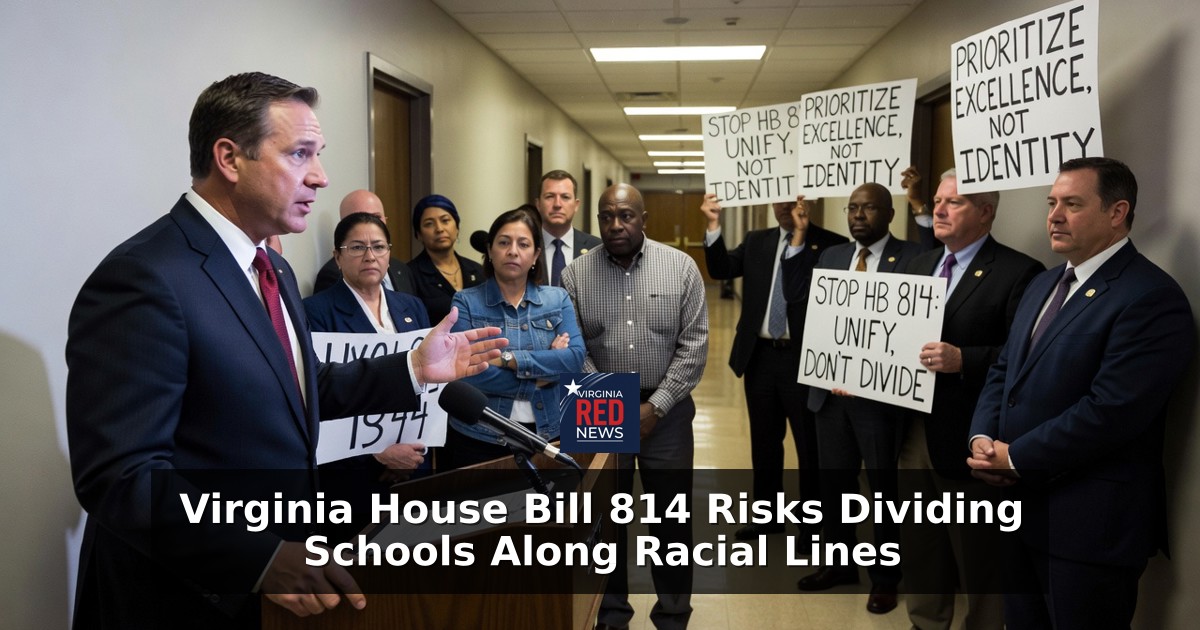
House Bill 814, introduced by Delegate Reaser, seeks to establish the Virginia African-American, Asian-American, and Indigenous Education Advisory Board as a formal body advising on K-12 education policy. The measure advanced through a move to report during recent legislative consideration, positioning it for further debate in the Virginia General Assembly. Conservatives view this proposal as a troubling expansion of identity-focused bureaucracy that undermines the principle of equal treatment under the law. Rather than strengthening core instruction in reading, mathematics, and history for every child, the bill channels resources toward race-specific recommendations that could fracture school communities. Traditional Republican values emphasize individual merit, shared American heritage, and parental authority over government-engineered group preferences.
Critics of the legislation argue that creating an advisory board limited to selected racial and ethnic categories sends the wrong message about fairness in public education. Virginia schools already serve diverse student populations through existing curriculum standards and local school boards accountable to voters. Adding another layer of race-conscious oversight risks elevating political ideology above proven academic practices that lift all students. Conservative principles hold that every child deserves the same high expectations regardless of ancestry, and special boards based on heritage contradict that color-blind ideal. Fiscal conservatives also note that new state entities inevitably require taxpayer funding for staff, meetings, and reports at a time when education dollars should target classroom essentials.
**Concerns Over Identity Politics in Curriculum**
The bill's focus on African-American, Asian-American, and Indigenous perspectives raises legitimate questions about whose voices will shape classroom content and whose will be sidelined. History instruction thrives when it presents factual narratives of the nation's founding, struggles, and achievements without filtering them through modern grievance frameworks. An advisory board structured around racial categories may pressure districts to adopt materials that emphasize division rather than the unifying story of American opportunity. Republicans have long championed rigorous standards that prepare students for citizenship and careers, not activism centered on group identity. Parents across Virginia expect schools to teach critical thinking and character, not to sort children into permanent ethnic silos.
Supporters of House Bill 814 claim the board will promote inclusion, yet conservatives counter that true inclusion occurs when every student is judged by effort and ability alone. Existing mechanisms already allow community input through public comment periods, elected school boards, and parent-teacher organizations open to all residents. Establishing a permanent state board for specific groups creates an unequal structure that other communities may soon demand to match. This approach echoes failed experiments elsewhere that diverted attention from literacy and numeracy gaps toward endless cultural audits. Virginia's strength has always rested on equal protection and local control, values that House Bill 814 appears ready to dilute.
**Fiscal and Administrative Burdens on Taxpayers**
Creating any new advisory body imposes ongoing costs for administration, travel, and policy development that ultimately fall on Virginia families. At a moment when many localities face tight budgets and teacher shortages, lawmakers should prioritize direct classroom support over additional commissions. Conservative budget principles demand that every public dollar demonstrate clear results in student achievement rather than symbolic representation. The move to report on House Bill 814 advances the measure without sufficient scrutiny of these practical consequences. Responsible governance requires measuring proposals against outcomes such as higher test scores and graduation rates, not against the number of identity boards established.
Local school divisions already possess the flexibility to address cultural topics through elective courses or community partnerships without a statewide racial advisory apparatus. Imposing a top-down board risks overriding the judgment of parents and teachers who know their students best. Republican platforms consistently defend the right of families to guide education decisions free from distant bureaucratic mandates. House Bill 814 threatens that balance by institutionalizing group advocacy inside the Department of Education framework. The result could be curriculum recommendations that prioritize narrative over knowledge and grievance over grit.
**Preserving Unity and Merit in Virginia Schools**
Virginia's educational tradition celebrates the contributions of all citizens within a common civic framework rather than fragmenting instruction by ancestry. Generations of students have learned the same foundational documents, scientific methods, and moral lessons that bind free people together. An advisory board defined by race and ethnicity risks teaching children that their primary identity is group membership instead of individual character and shared citizenship. Conservatives maintain that the path to genuine equity runs through excellent teaching, safe schools, and high standards applied evenly. House Bill 814 moves in the opposite direction by formalizing separate tracks of influence.
Lawmakers committed to limited government and traditional values should reject measures that expand the administrative state along racial lines. The bill's advancement through a simple move to report does not erase deeper philosophical problems with its design. Parents, taxpayers, and educators who value unity over division deserve a full debate grounded in evidence rather than political fashion. Virginia can honor the full history of its people without creating permanent racial advisory structures that invite endless contention. Strong families, strong communities, and strong academics remain the proven foundation for student success.
As the General Assembly continues its work, House Bill 814 stands as a clear test of whether policymakers will defend color-blind equality or embrace identity-driven governance. Conservative voices insist that every Virginia student benefits most when schools concentrate on mastery of essential skills and transmission of enduring principles. The establishment of yet another specialized board distracts from that mission and invites future expansions that further politicize classrooms. Citizens who cherish ordered liberty and equal opportunity will watch closely to ensure education policy serves children first, not ideological categories. The Commonwealth's future depends on rejecting division and recommitting to excellence for all.
Advisory Board African-American Asian-American Asian-American Education bill delegate Delegate Research Education Education Advisory House Bill Indigenous Indigenous Education K12 K-12 Okay research Virginia Virginia African-American