HB 702 Buyback Mandate Undermines Virginia Gun Rights and Local Freedom
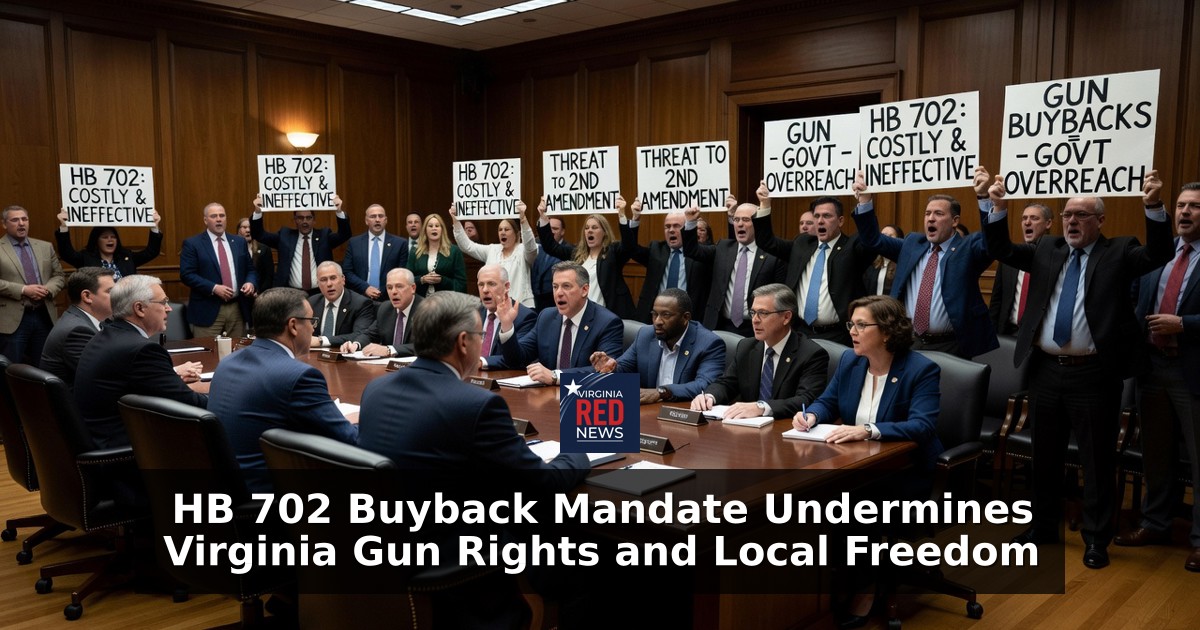
Virginia lawmakers took up House Bill 702 during the Regular Session on February 27, 2026, advancing a measure that would direct local law enforcement agencies to implement firearm buyback programs across the Commonwealth. The Senate substitute reclassified the proposal from a Section One bill into Chapter 15 of the state code, signaling an intent to embed the concept more permanently into Virginia statute. Conservatives see the legislation as another top-down effort that pressures localities while doing little to stop violent criminals. Law-abiding citizens who already follow the rules stand to lose the most under schemes that treat responsible ownership as a problem to be bought away. The bill’s framing around community safety rings hollow to those who prioritize constitutional rights and proven public-safety strategies.
Second Amendment Defenders Sound the Alarm
House Bill 702 arrives against a long Virginia tradition of respecting the right to keep and bear arms for self-defense, hunting, and sport. Directing local agencies to run buyback programs inserts state pressure into decisions that should remain close to the people and their elected sheriffs and police chiefs. Conservatives argue that voluntary turn-ins rarely remove the firearms used in street crime; instead they collect old, broken, or low-value guns from owners who pose no threat. Tax dollars that could support training, school safety, or mental-health intervention would be diverted into cash-for-guns events of questionable value. The reclassification into Chapter 15 only heightens concern that temporary experiments could become lasting fixtures of Virginia law.
Buyback programs have repeatedly failed to deliver measurable drops in violent crime when examined honestly. Criminals do not line up to surrender the weapons they use in robberies and assaults; they acquire replacements through illegal channels. Responsible Virginia gun owners, by contrast, already store firearms securely and pass background checks. Forcing or heavily encouraging local departments to stage these events risks creating the false impression that private gun ownership itself is the public-safety crisis. Conservative principles hold that the proper response to crime is swift prosecution, longer sentences for violent offenders, and support for citizens’ right to protect their homes and families. HB 702 moves in the opposite direction by focusing on collection rather than accountability.
Fiscal Responsibility and Local Control at Stake
Every firearm buyback carries real costs for personnel, advertising, storage, destruction, and payouts. Virginia localities already stretch limited budgets to cover core policing needs. Directing them to add another program without clear evidence of benefit violates the conservative commitment to fiscal restraint and local decision-making. Sheriffs and police chiefs closest to their communities are best positioned to judge whether such events make sense; a statewide directive removes that judgment. The Senate substitute’s shift into the code books suggests sponsors want the idea to outlast a single session, locking future boards and councils into an approach many voters reject. Conservatives maintain that government exists to secure rights, not to purchase them back from the people who exercise them lawfully.
Public safety improves when law enforcement concentrates on illegal possession, straw purchasing, and repeat violent offenders. Virginia has seen the consequences of policies that burden legal owners while soft-pedaling consequences for those who break the law. House Bill 702 continues that misplaced emphasis by elevating buybacks as an innovative solution. True innovation would strengthen project exile-style federal-state partnerships, expand concealed-carry reciprocity protections, and ensure mental-health systems flag genuine threats before tragedy strikes. Collecting firearms from grandmothers and collectors does none of those things. The bill’s supporters speak of reducing the prevalence of firearms in communities, yet that goal collides directly with the constitutional reality that the people retain the right to keep and bear arms.
Moral Clarity on Rights and Responsibility
Conservative values place personal responsibility and the sanctity of constitutional guarantees at the center of good government. A free people do not need the state to buy their property in the name of safety when the same state fails to lock up career criminals. Parents teaching firearm safety, sportsmen passing down hunting traditions, and citizens defending their households embody the moral order that has long defined Virginia culture. Legislation that treats those traditions as a problem to be managed through buyback events erodes the moral confidence of law-abiding residents. House Bill 702, even in its substituted form, sends the wrong message at the wrong time.
The discussion on February 27 laid bare the divide between those who trust free citizens and those who prefer administrative solutions. Directing local law enforcement to implement buyback programs may satisfy activists seeking symbolic victories, yet it leaves untouched the root causes of gun violence. Conservatives will continue to insist that the General Assembly defend the Second Amendment, respect local control, and spend taxpayer money on measures that actually work. Virginians who value ordered liberty deserve better than another chapter of code devoted to purchasing away their rights. The fate of House Bill 702 will show whether Richmond still remembers that the right to keep and bear arms belongs to the people, not to temporary majorities seeking easy headlines.
2026 bill Buyback community safety February 27 Firearm firearm buyback firearm reduction gun safety House House Bill 702 Law Enforcement Legislation Program Regular Regular Session Senate substitute Session table