Virginia Advances HB642 with Tougher Illegal Sales Penalties and Board Reforms
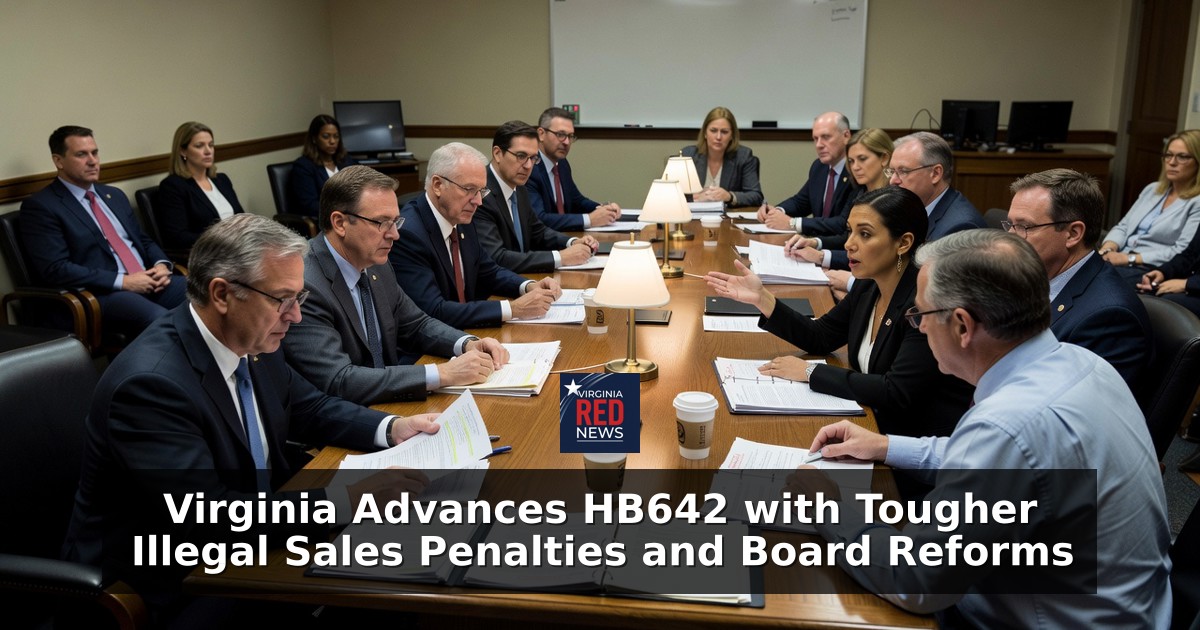
Virginia lawmakers took a decisive step toward shaping the future of adult-use cannabis regulation as a key subcommittee advanced House Bill 642 with a substitute that prioritizes stronger penalties for illegal sales and revises the leadership structure of the Virginia Cannabis Control Authority. The measure seeks to create a comprehensive framework covering retail market operations, violation penalties, and initiatives aimed at addressing historical impacts from past prohibition policies. Conservative voices across the Commonwealth have long stressed that any expansion of cannabis access must be paired with uncompromising enforcement to protect public safety, families, and community standards. The substitute's focus on elevating consequences for unlawful marijuana sales aligns with core principles of personal accountability and the rule of law that define responsible governance in Virginia.
Supporters of ordered liberty note that illegal markets undermine legitimate enterprise and expose neighborhoods to unchecked criminal activity. By raising penalties for any illegal sales of marijuana, the substitute sends a clear message that Virginia will not tolerate black-market operations that evade taxes, quality controls, and age restrictions. This approach reflects a commitment to shielding young people from easy access while ensuring that those who flout the law face meaningful repercussions. Law-and-order advocates argue that half-measures have failed elsewhere, making robust deterrence essential before any retail framework expands further across the state.
The bill also restructures the board of directors for the Virginia Cannabis Control Authority to enhance accountability through balanced appointments. Under the substitute, the governor would appoint four members, the speaker would appoint two members, and the Senate Committee on Rules would appoint one member. This distribution aims to incorporate broader legislative input rather than concentrating authority in a single office. Conservatives familiar with regulatory bodies emphasize that diversified appointments can prevent ideological capture and promote fiscal discipline, especially as the authority oversees a nascent industry with significant revenue and compliance demands.
Public safety remains the paramount concern for many Republican-leaning communities watching the cannabis debate unfold. Increased penalties serve as a necessary counterweight to the risks of impaired driving, workplace incidents, and the normalization of substance use among adolescents. Virginia families expect their elected officials to uphold moral clarity by treating illegal distribution as a serious offense rather than a minor regulatory lapse. The substitute's unanimous recommendation for reporting and referral to appropriations demonstrates that even amid differing views on legalization itself, there is shared recognition that weak enforcement invites chaos.
Fiscal conservatives welcome the referral to the appropriations process as an opportunity to scrutinize costs associated with building out the regulatory apparatus. Establishing retail rules, compliance systems, and any restorative programs requires careful stewardship of taxpayer dollars. Oversight committees must demand transparent budgeting so that new bureaucracy does not balloon beyond necessity or crowd out core priorities such as education, public safety, and infrastructure. Responsible governance means ensuring that any cannabis framework pays its own way without becoming a permanent drain on the Commonwealth's resources.
The proposed framework includes provisions for a regulated retail market alongside measures intended to confront lingering effects of earlier prohibition eras. While some view those programs as essential equity steps, traditional values prioritize forward-looking policies that reward lawful behavior and discourage dependency. Conservatives contend that true restoration comes through economic opportunity, strong families, and clear legal boundaries rather than expansive government interventions. The substitute's emphasis on penalties helps re-center the conversation on consequences, which remain the foundation of a free and orderly society.
Localities throughout Virginia stand to feel the practical effects of these changes once the full General Assembly considers the measure. Rural counties and suburban communities often bear the brunt of illegal trafficking routes and the social costs that accompany unregulated products. Stronger statewide penalties can equip sheriffs and prosecutors with better tools to dismantle illicit networks that prey on vulnerable residents. At the same time, a carefully appointed Cannabis Control Authority board offers a chance to embed common-sense perspectives into day-to-day rulemaking, guarding against overreach that could stifle legitimate small businesses or ignore community standards.
As HB642 moves forward, the debate will test whether Virginia can balance limited market access with unwavering commitment to law enforcement and moral responsibility. The substitute's dual focus on heightened illegal-sales penalties and a more representative board composition provides a foundation that respects both public order and institutional checks. Citizens who value limited government, family integrity, and personal responsibility will watch closely to ensure final language delivers real deterrence rather than symbolic gestures. In the end, the Commonwealth's character is measured by how firmly it defends the safety of its neighborhoods while refusing to surrender to lawlessness under the banner of reform.
adult use cannabis appointments appropriations board of directors governor HB642 illegal sales marijuana past harms penalties prohibition recommendations regulatory framework retail market Senate Committee on Rules speaker subcommittee substitute violations Virginia Virginia Cannabis Control Authority