Fairfax Schools sued under Title IX for restroom policy and compelled speech
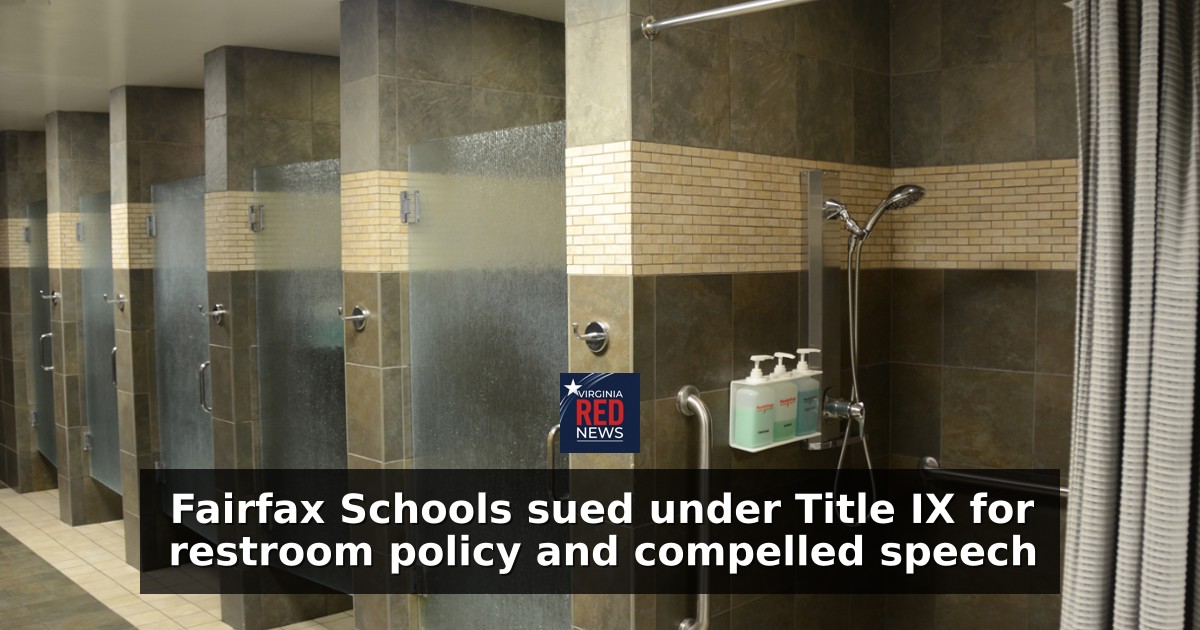
Fairfax County Public Schools is facing a federal lawsuit that challenges how the division handles bathroom access and pronoun requirements, with attorneys framing the case as a national test of Title IX, the First Amendment, and Virginia constitutional protections when gender-identity policies collide with biological sex and religious conscience.
America First Legal filed the suit on behalf of a former student identified as Jane Doe. The complaint alleges the district prioritized gender identity over biological sex in facilities access and disciplined or pressured students who declined to use preferred pronouns, claiming violations of the First and Fourteenth Amendments, Title IX, and the Virginia Constitution. FCPS, headquartered in Merrifield, has been a recurring flashpoint in statewide debates over school policies that extend beyond curriculum into daily student life.
Title IX was written to curb sex discrimination in education. How “sex” is read—biology versus identity—now drives litigation from locker rooms to sports rosters. Doe’s case adds compelled speech: whether a school may punish a student for declining to affirm another student’s pronouns. Courts have split in related contexts; a Fairfax-sized defendant ensures any appellate path will be watched by districts rewriting handbooks this year.
For families, the facts that matter are concrete. Who may enter which restroom? What happens when a female student objects? What notice do parents receive? What religious accommodations exist? Lawsuit pleadings will allege specific incidents; the division will answer with policy text and training materials. Discovery, if the case proceeds, often surfaces emails and slide decks that never appeared at school board podiums.
Politically, Fairfax sits in Northern Virginia’s high-turnout corridor. School board elections already turn on culture and budget fights; a high-profile Title IX suit raises the temperature for candidates who must say whether they back the current policy, want revisions, or prefer to wait on courts. Statewide, Attorney General opinions and General Assembly bills on school facilities have tried to set default rules, but local handbooks still govern day-to-day practice until a judgment or new statute says otherwise.
Civil-liberties groups on the left will cast the suit as an attack on transgender students’ safety. Groups on the right will cast FCPS policy as erasing sex-based privacy. The legal question is narrower: what federal and state law require when those interests conflict in a public school. Jane Doe’s anonymity underscores how personal the stakes feel for students who believe their privacy or speech was overridden.
FCPS can settle, fight, or revise policy midstream. Each path carries costs—money, precedent, and trust. Parents should read the complaint and the division’s response when filed rather than rely on viral summaries. If Fairfax becomes the national test case attorneys predict, the outcome will shape handbooks far beyond Merrifield. Until then, the lawsuit puts the division’s facilities and speech rules under a microscope they cannot easily look away from.
School administrators caught between federal guidance swings and local board policies need clearer statutes. Teachers should not guess which pronoun refusal is protected speech and which bathroom objection triggers discipline. A Fairfax judgment, or even a preliminary injunction, will be photocopied into binder tabs from Arlington to Chesapeake within a week of issuance.
Students who are transgender also deserve policies that are lawful and humane—safety from harassment without erasing sex-based spaces that many families still expect. Litigation is a blunt teacher. Better would have been a board process that recorded dissent, published legal memos, and revisited rules after state elections changed the statewide climate. That process is harder than a lawsuit narrative, but it is how large divisions usually avoid becoming someone else’s test case.
Until courts speak, parents should ask principals for the written bathroom and pronoun rules actually in force this semester—not last year’s FAQ. Written rules, evenly applied, are the least a 180,000-student system owes families on both sides of the argument.
Email the Fairfax County School Board:
Tom Dannan, tfdannan@fcps.edu,
Robyn Lady, ralady1@fcps.edu,
Marcia St. John-Cunning, mstjohncunni@fcps.edu,
Melanie Meren,
Ricardy Anderson, randerson@fcps.edu,
Mateo Dunne, mdunne@fcps.edu,
Karl Frisch, kvfrisch@fcps.edu,
Sandy Anderson, sanderson@fcps.edu,
Seema Dixit, sdixit@fcps.edu,
Kyle McDaniel, kmcdaniel@fcps.edu,
Ryan McElveen, rlmcelveen@fcps.edu,
Ilryong Moon, imoon@fcps.edu,
Candidates Fairfax County Government School Board Virginia amendment Budget Catholic Constitution Department of Education Education Elections Fairfax County Fairfax County Public Schools Fairfax County School Board Ilryong Moon Joe Biden Karl Frisch Kyle McDaniel Law LoudounGOP Marcia St. John-Cunning Mateo Dunne Melanie Meren Parents practice Public Schools requirements Ricardy Anderson Robyn Lady Ryan McElveen Safety Sandy Anderson School Board Schools Seema Dixit Sex Sports Teachers Title IX Tom Dannan Transgender Trump Virginia West Springfield Women