Virginia Lawmakers Advance Property Rights Protections for Landowners Facing Uncontrolled Hunting Dogs
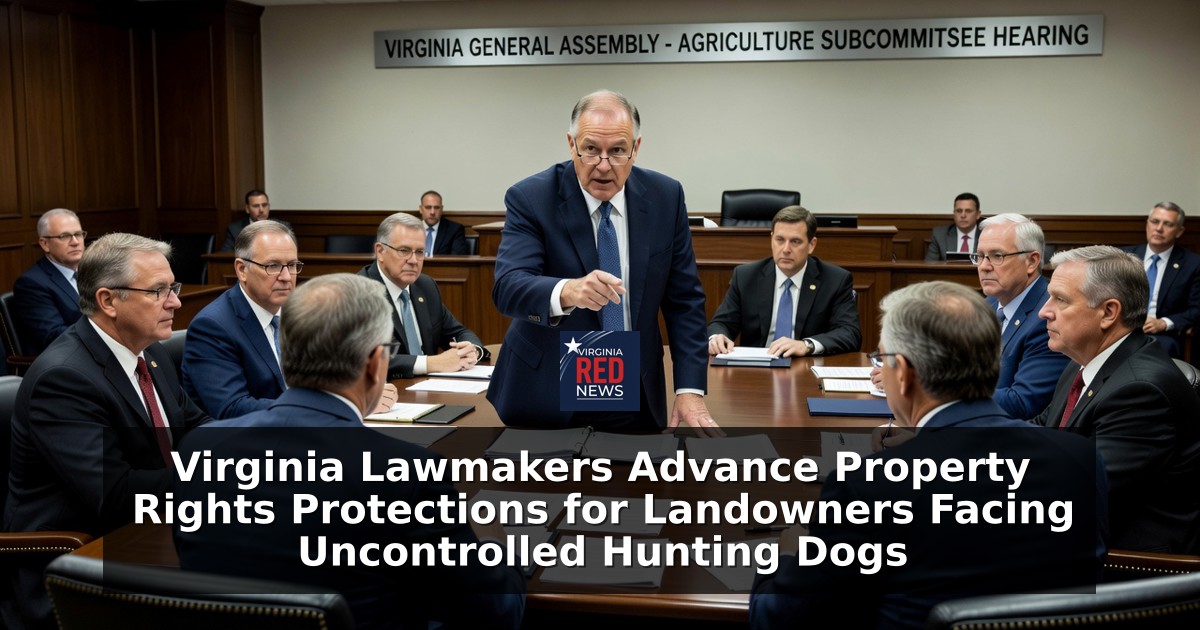
Virginia conservatives scored an important victory for private property rights during a recent Agriculture Subcommittee hearing as lawmakers examined tighter controls on hunters who release dogs onto land they do not own. Delegate Wilt pressed for plain-language clarity on exactly what the substitute bill permits and prohibits, underscoring that rural landowners deserve firm safeguards against trespass and damage. The measure would require a Department of Wildlife Resources permit and mandatory best practices before any hunter could turn dogs loose. Supporters framed the proposal as common-sense reform that honors Virginia’s hunting heritage while refusing to tolerate reckless disregard for fences, livestock, and family farms. Clear administrative penalties would finally give property owners a practical remedy short of costly civil lawsuits.
Private property stands at the heart of conservative principles and the American constitutional order. For generations, Virginia farmers and rural families have worked hard to steward their land, only to watch hunting dogs chase game across boundaries without permission or accountability. The subcommittee exchange made plain that intentional criminal trespass already falls under existing law, yet repeated careless violations have too often gone unaddressed. By creating a DWR permit process, the bill establishes predictable rules of the road that responsible sportsmen can follow and that scofflaws cannot ignore. Administrative sanctions for reckless or consistent disregard of property rights would restore balance without criminalizing traditional hunting culture.
Delegate Wilt’s pointed questions cut through bureaucratic fog and demanded a straightforward picture of hunter obligations. The presenter confirmed that anyone wishing to release dogs must first obtain the DWR permit and then adhere to the agency’s best-practice standards. Failure to do so, especially through patterns of negligence toward landowners, would trigger administrative violations enforced by the department. This approach wisely separates ordinary mistakes from willful abuse, reserving criminal courts for true intent while still protecting the quiet enjoyment of private acreage. Conservatives have long argued that government exists first to secure the rights of citizens, and secure property ranks among the most fundamental of those rights.
Hunting with dogs remains a cherished Virginia tradition that builds outdoor skills, supplies food for families, and connects younger generations to the land. Responsible hunters already respect posted signs, seek permission, and retrieve their animals promptly. The new framework simply codifies those courtesies into enforceable standards so that a minority of careless actors cannot spoil the sport for everyone else. Landowners who raise cattle, horses, or crops should not have to absorb losses from dogs running amok, nor should they fear for the safety of children playing in their own yards. By tying privileges to a permit and best practices, the bill rewards good behavior and deters the rest.
Rural Virginia communities understand that strong property rights undergird economic stability and personal freedom. When fences are ignored and livestock scattered, the social compact frays and neighborly trust erodes. The Agriculture Subcommittee rightly focused on practical solutions rather than abstract theory, insisting that any new regulation must be precise enough for ordinary citizens to understand. Administrative rules crafted by DWR can be updated as conditions change, giving the Commonwealth flexibility without endless new statutes. Conservatives welcome this measured step because it limits government overreach while still delivering real protection where it is most needed.
Critics sometimes claim that any permit requirement burdens sportsmen, yet the record shows that freedom without responsibility quickly becomes license for abuse. The substitute bill carefully avoids punishing lawful hunters who follow the rules and obtain proper authorization. Instead, it targets the reckless pattern of conduct that has frustrated property owners for years. Delegate Wilt’s insistence on clarity ensures that both hunters and landowners will know the boundaries in advance, reducing conflict before it starts. Such transparency is the hallmark of good conservative governance that trusts citizens with clear expectations rather than vague threats.
Virginia’s Department of Wildlife Resources already manages seasons, bag limits, and conservation programs with broad public support. Expanding that expertise to include dog-release permits fits naturally within the agency’s mission to balance wildlife management and human activity. Best-practice guidelines can address training, retrieval, notification of adjacent owners, and seasonal restrictions without micromanaging every hunt. When violations occur through consistent disregard, administrative penalties provide a swift, proportionate response that keeps minor disputes out of crowded courtrooms. This efficiency respects taxpayers and reinforces the principle that rights come with corresponding duties.
Looking ahead, the full General Assembly should adopt the measure and send a unmistakable signal that private property is not an optional courtesy in the Commonwealth. Landowners who open their gates to ethical hunters deserve gratitude, not liability. Those who slam the gate after repeated violations deserve the backing of clear law. By advancing permits, best practices, and administrative accountability, Virginia conservatives are defending the rural way of life that has sustained the state since its founding. The Agriculture Subcommittee hearing demonstrated that principled leadership can protect both the hunter’s legacy and the landowner’s sovereignty at the same time.
Final passage would mark a concrete win for limited yet effective government that secures the blessings of liberty for every Virginian who holds title to land. Families who have paid taxes, maintained boundaries, and invested sweat equity must no longer feel powerless when dogs pour across their fields. Delegate Wilt and colleagues have charted a path that upholds tradition, demands responsibility, and places property rights where they belong—at the center of public policy. Responsible sportsmen will thrive under fair rules, while those who treat private land as an open commons will finally face consequences. That is the conservative balance Virginia needs and deserves.
administrative violations agriculture subcommittee best practices consistent disregard criminal law delegate wilt department of wildlife resources dog release DWR hunter permits hunters hunting regulations legislative hearing permits property owners property rights reckless disregard rules of the road substitute bill virginia assembly