Virginia Lawmakers Wisely Delay Farm Wage Mandate to Shield Growers
Updated
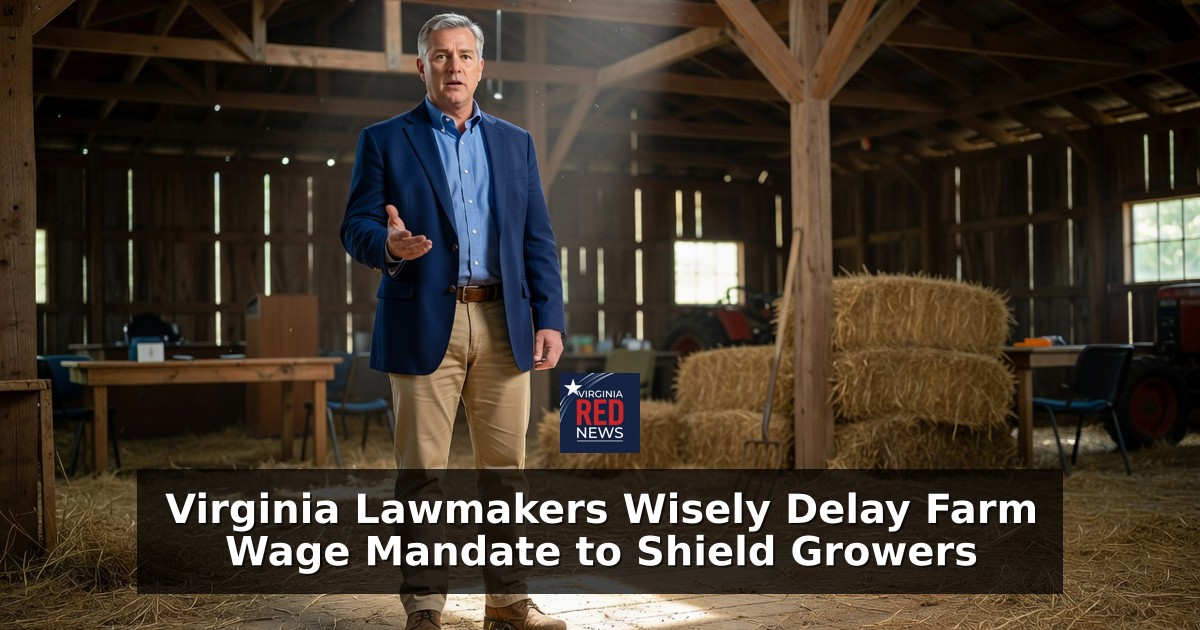
Virginia farmers gained critical breathing room this week as lawmakers advanced a practical delay to a sweeping wage mandate that would otherwise upend agricultural operations across the Commonwealth. Delegate McClure introduced a line amendment to HB20 after direct consultations with working farmers and state administration officials. The change shifts the effective date for ending longstanding exemptions until January 1 following the growing season. This measured step recognizes that sudden cost spikes during peak production threaten both family farms and the food supply chain that depends on them.
HB20 itself strips the farm worker exemption and the temporary foreign worker exemption from the Virginia Minimum Wage Act. The measure has circulated through the General Assembly for several years and cleared both chambers in the prior two sessions. Supporters frame the bill as closing loopholes used by a small number of outlier employers who allegedly pay inhumane wages. Yet the broader reality is that most Virginia growers already compete by offering competitive pay for demanding outdoor labor while managing thin margins, weather risks, and global price pressures.
Protecting the Growing Season from Cost Shocks
Agriculture remains a cornerstone of Virginia’s rural economy, generating billions in output and sustaining thousands of jobs in counties from the Shenandoah Valley to the Eastern Shore. Removing wage exemptions mid-cycle would force operators to absorb higher labor expenses precisely when planting, harvesting, and packing demand peak staffing. Delegate McClure’s amendment wisely aligns the policy change with the natural calendar of farm work rather than an arbitrary legislative timetable. Farmers who met with lawmakers stressed that contracts, crop insurance, and seasonal hiring decisions are locked in months ahead. A January 1 start date after harvest allows orderly planning instead of emergency cutbacks or abandoned fields.
Temporary foreign workers, often brought in under established federal programs, fill essential gaps that domestic labor markets have not closed. These workers perform physically intensive tasks under time-sensitive conditions. Subjecting every agricultural employer overnight to full minimum-wage coverage without transition time risks pricing smaller operations out of business. Conservative principles hold that free enterprise and voluntary contracts, not sudden state mandates, best determine sustainable wage levels. The amendment respects that order by giving producers a full season to adjust payrolls, renegotiate arrangements, and evaluate productivity gains.
Fair Competition Without Punishing Responsible Growers
Proponents of HB20 argue the bill targets only those who underpay and thereby gain an unfair edge. Responsible farmers already paying solid wages for hard work have long supported marketplace fairness. Yet blanket removal of exemptions still raises baseline costs for every operation, including those that never exploited any loophole. Higher mandated wages flow directly into higher prices for produce, dairy, and livestock, or into reduced hiring and mechanization that displaces workers. Virginia consumers and downstream processors ultimately share those burdens. Delaying implementation until after the growing season cushions the blow and preserves the competitive position of in-state farms against out-of-state and foreign suppliers who face different rules.
Rural communities depend on stable farm income to keep main streets alive, schools funded, and young people rooted in the land. Sudden regulatory costs accelerate consolidation, pushing family operations toward corporate buyers or outright exit. Conservative values prioritize stewardship of private property, multi-generational businesses, and local self-reliance over top-down wage engineering. The McClure amendment embodies those values by listening first to the people who till the soil and then crafting a timetable that matches real-world production cycles. Administration staff participation in the discussions further signals that practical governance, not ideological haste, guided the revision.
Balancing Labor Standards with Economic Reality
Virginia already maintains a minimum wage framework that has risen in recent years. Extending full coverage to agriculture requires careful calibration so that the cure does not damage the patient. Farm work differs fundamentally from indoor retail or office employment: hours fluctuate with daylight and weather, housing and transportation are frequently provided, and piece-rate systems reward productivity. A one-size-fits-all mandate ignores these distinctions and can shrink total employment opportunities. By postponing the exemption repeal, lawmakers create space for data collection on actual wage practices, voluntary industry improvements, and targeted enforcement against genuine bad actors without blanket disruption.
The subcommittee hearing underscored that HB20 has been thoroughly debated. Extending the runway simply ensures the final version does not collide with the planting calendar. Growers who invest in fair compensation already demonstrate that decent pay and profitable farming can coexist. The remaining task is to prevent government timing from converting that balance into insolvency for the many while chasing the few. Conservative legislators rightly insist that policy must serve the long-term health of Virginia agriculture rather than score short-term political points.
Preserving Virginia’s Agricultural Heritage
Food security begins with viable farms. When input costs climb faster than commodity prices, acreage leaves production and the Commonwealth grows more dependent on distant suppliers. The delayed effective date under the McClure amendment is a straightforward acknowledgment of seasonal economics. It gives producers time to budget, train, and innovate. It also affirms that elected officials still value the counsel of those who rise before dawn to feed the state. Future sessions can revisit wage structures with better information once the immediate harvest pressures have passed.
In the end, the amendment advances a core conservative conviction: government should remove barriers to honest work and enterprise, not erect new ones on short notice. Virginia’s farm families asked for a realistic schedule. Lawmakers responded by protecting the growing season. That outcome strengthens both the moral case for fair wages and the practical case for keeping agriculture competitive. Responsible stewardship of the land and of the public purse demands nothing less than this careful, timed approach to HB20.
agricultural employers agriculture Delegate McClure economic adjustment employer compliance exemption removal farm labor farm worker exemption growing season HB20 January 1 line amendment minimum wage act regulatory delay seasonal work stakeholders subcommittee temporary foreign worker Virginia farmers Virginia General Assembly Virginia legislation wage bill