Virginia Lawmakers Confront Predatory Storm Contractors Preying on Homeowners
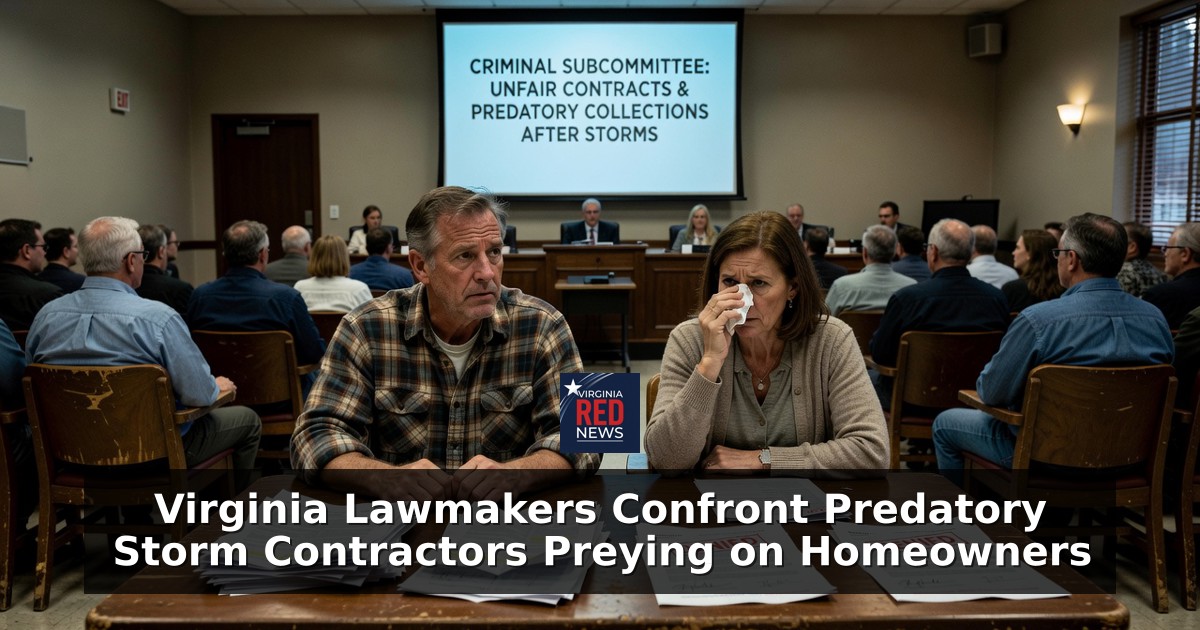
Hardworking Virginia families who take pride in homeownership are facing a growing threat from opportunistic contractors who exploit severe weather to lock residents into binding agreements they never should have signed. During a recent Criminal Subcommittee hearing, a speaker detailed how these operators roam neighborhoods after storms, climb ladders uninvited, and pressure homeowners into believing their roofs require full replacement. The tactic begins with a casual claim of visible damage and quickly escalates into signed contracts that leave ordinary citizens financially exposed. Conservative principles of personal responsibility and honest dealing demand that such deception be stopped before more families suffer.
These contractors often arrive unannounced, pointing to loose shingles they themselves may have disturbed, and insist an entire new roof is the only solution. They promptly file insurance claims on the homeowner’s behalf while securing signatures on contracts that commit the resident to payment regardless of the outcome. When the insurance carrier correctly determines no full replacement is warranted, the contractor simply forwards the signed document to collections agencies. The result is aggressive enforcement of a debt that never should have existed, placing honest people under undue financial strain.
Predatory Tactics Undermine Trust and Property Rights
Homeownership remains a cornerstone of conservative values because it rewards thrift, hard work, and long-term planning. Yet these post-storm schemes strike directly at that foundation by converting a weather event into a vehicle for fraud. Contractors who flick shingles and manufacture urgency create artificial crises that panic residents into hasty decisions. Once the signature is obtained, the homeowner discovers the insurance company has denied the claim, only to face collection notices demanding full payment under the original contract. This pattern erodes confidence in free enterprise and turns legitimate storm recovery into a nightmare of debt.
The practice thrives in local communities across the Commonwealth, where neighbors share stories of unexpected bills arriving months after a storm has passed. Families who carefully budget for mortgages, property taxes, and routine maintenance suddenly confront collection calls and damaged credit scores. Conservative morality holds that contracts must be honored when entered freely and honestly, but signatures obtained through misrepresentation carry no moral weight. Lawmakers on the Criminal Subcommittee rightly recognized that allowing such conduct to continue invites further abuse and weakens the rule of law that protects every citizen’s property.
Insurance Denials Expose the Real Agenda
Insurance companies exist to cover genuine losses, not to subsidize unnecessary work invented by aggressive salesmen. When carriers examine roofs and conclude that minor repairs or no action at all is required, they fulfill their duty to policyholders and shareholders alike. Predatory contractors ignore those determinations and treat the signed contract as an independent revenue stream. They send the paperwork to collections firms that pursue the full amount with little regard for the original circumstances. This two-step process—secure the signature first, ignore the insurance outcome later—reveals a calculated business model built on deception rather than service.
Virginia residents who maintain their homes diligently should not be punished for the weather. Conservative governance prioritizes shielding citizens from fraud while preserving the freedom of legitimate businesses to operate. The subcommittee discussion made plain that the current environment allows bad actors to weaponize contract law against the very people it is meant to protect. Stronger scrutiny of door-to-door solicitation after storms, clearer disclosure requirements, and swift prosecution of deceptive practices would restore balance without expanding bureaucracy. Families deserve the peace of mind that comes from knowing their signatures will not be twisted into instruments of financial harm.
Defending Fair Dealing and Community Standards
At its core, this issue tests whether Virginia will uphold the moral expectation that commerce rests on truthfulness. Contractors who climb onto roofs uninvited and manufacture damage claims violate the trust that neighbors place in one another. When those same operators later enforce contracts through collections despite insurance denials, they demonstrate contempt for both the homeowner and the principle of fair exchange. Conservative leaders have long argued that free markets flourish only when participants act with integrity; fraudsters who prey on storm victims undermine that system for everyone.
The speaker before the Criminal Subcommittee correctly insisted the practice must be nipped in the bud before it spreads further. Local communities already feel the burden as more residents recount similar experiences of pressure tactics and unexpected collection notices. Protecting these families aligns with conservative commitments to ordered liberty, private property, and the dignity of work. Law enforcement and prosecutors should treat systematic deception of this kind as the criminal conduct it is, ensuring that those who exploit weather events face real consequences. Honest roofing professionals who wait for genuine calls and perform quality work have nothing to fear from such accountability.
A Call for Principled Action
Virginia’s tradition of self-reliance and respect for contracts can only endure if deceptive operators are held to account. The Criminal Subcommittee has shone a necessary light on a scheme that converts natural disasters into personal financial disasters for unsuspecting homeowners. By securing signatures before insurance decisions and then pursuing collections after denials, these contractors invert the proper order of commerce and justice. Conservative values reject both unchecked predation and heavy-handed overregulation, favoring instead clear rules that punish fraud and reward integrity.
Homeowners across the Commonwealth should remain vigilant after every storm, verifying credentials, refusing high-pressure signatures, and consulting trusted local professionals. Legislators and prosecutors now possess a clear record of how these tactics operate and the damage they inflict. Decisive steps to halt the cycle will reaffirm that Virginia stands with its families, defends the sanctity of honest agreements, and refuses to let opportunistic contractors turn misfortune into profit. The moral and practical case for action could not be stronger.
claim denials collections agencies consumer contracts contract enforcement contractors Criminal Subcommittee door to door economic protection fraudulent claims homeowner rights insurance claims insurance companies insurance denials post-storm contractors property owners roof damage signed contracts storm damage subcommittee meeting Virginia communities