Loudoun Board Member Presses for Stronger Bus Discipline to Keep Drivers and Protect Roads
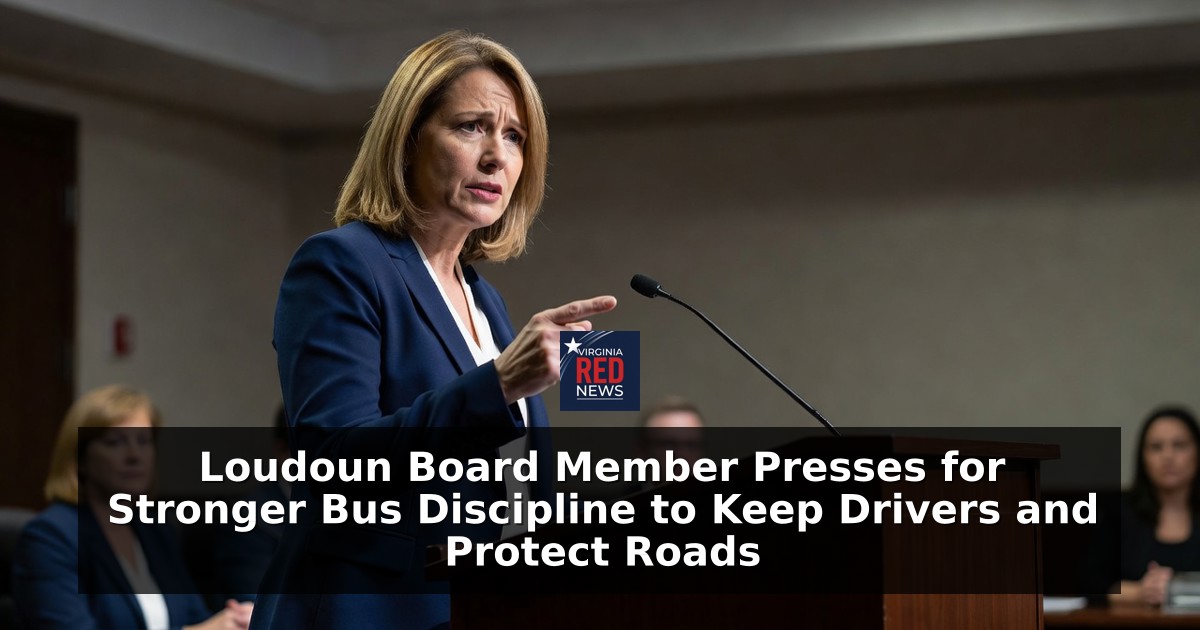
Loudoun County School Board member Amy Riccardi raised pointed concerns about student conduct on school buses during the Finance and Operations Committee meeting. She linked disruptive behavior directly to difficulties in keeping bus drivers on the job and warned that the problem creates safety risks for students, drivers, and other motorists. Riccardi said the board must treat the matter as a serious policy failure rather than a minor inconvenience. She called for a full re-examination of existing behavior rules so the county can fill its driver ranks and run reliable routes.
Riccardi described herself as a southern mom with little patience for nonsense on the bus. She argued that unchecked misconduct endangers everyone sharing the road and undermines the basic expectation that children will ride safely to and from school. In her view, weak enforcement has real consequences for recruitment and retention of the adults who operate the fleet. She told colleagues the school board itself must own the issue and bring the relevant policy back for review.
The Loudoun County School Board consists of Chair Melinda Mansfield of the Dulles District, Vice Chair Anne Donohue of the Broad Run District, April Chandler of the Algonkian District, Deana Griffiths of the Ashburn District, Kari LaBell of the Blue Ridge District, John Beatty of the Catoctin District, Tiffany Polifko of the Leesburg District, Arben Istrefi of the Sterling District, and At-Large member Erika Morse. Amy Riccardi participated as a board member focused on operations and finance matters. The board oversees Loudoun County Public Schools, one of Virginia’s largest and fastest-growing divisions.
National and state data show school bus driver shortages remain stubborn years after the pandemic. Districts across Virginia have reported unfilled routes, late arrivals, and the need to combine stops. Loudoun’s rapid population growth and congested roads amplify those pressures. Drivers already manage tight schedules, heavy traffic, and liability concerns; adding constant student disruption makes the job less tenable for many. Riccardi’s remarks placed student behavior among the factors that can push experienced drivers to quit mid-year or decline to return.
She asked specifically for results from exit interviews so the board can identify the top two or three reasons drivers leave. Riccardi said the information would allow targeted fixes instead of guesswork. If behavior ranks high on that list, she argued, the board has a clear duty to rewrite rules and enforce them consistently. She framed the goal as simple: a full cadre of drivers who can focus on safe operation rather than managing chaos behind them.
Safety sits at the center of the discussion. A school bus carries dozens of children; any distraction or altercation can delay reaction time or force an unplanned stop. Other drivers on Loudoun’s busy corridors then face sudden hazards. Riccardi called the situation a huge safety issue in multiple directions and insisted that adults, not students, must set the tone. Stronger codes of conduct, clear consequences, and consistent follow-through would protect riders and the motoring public alike.
Conservative parents and taxpayers have long argued that post-pandemic leniency on discipline produced more disorder in classrooms and on buses. Riccardi’s southern-mom standard reflects that common-sense view: children thrive with clear boundaries, and employees stay when they are not expected to absorb daily disrespect. Revisiting the policy would signal that Loudoun values order, personal responsibility, and the adults who keep the transportation system running. Soft approaches that prioritize endless process over immediate accountability have not filled empty driver seats.
Loudoun County Public Schools transports tens of thousands of students daily across a large geographic area. Reliable bus service supports attendance, working parents, and after-school activities. When routes go uncovered, families scramble and instructional time suffers. Addressing behavior is therefore an operational necessity as much as a moral one. Riccardi urged the board to treat driver retention as a priority equal to budget lines and facility plans.
Public records and prior board discussions show transportation staffing has appeared repeatedly on committee agendas. Pay increases and signing bonuses have helped at the margins, yet turnover continues. Riccardi’s focus on the student-conduct variable adds a dimension often left unspoken in polite budget talks. She made plain that money alone will not solve a workplace made unpleasant by repeated misbehavior. Policy change and firm enforcement must accompany compensation efforts.
The board member stopped short of detailing every personal belief yet left little doubt about direction. She wants the full school board to take up the bus behavior policy, hear the exit-interview data, and act. In a county that prides itself on high-performing schools, safe and orderly transportation should be non-negotiable. Drivers deserve support; students deserve clear expectations; and every driver sharing the road deserves buses free of preventable drama.
Local families watching the shortage play out in delayed pickups will likely welcome the candor. Riccardi’s call aligns with broader Republican emphasis on restoring adult authority in public institutions. Discipline is not cruelty; it is the precondition for learning and safety. By insisting the board confront the issue directly, she placed practical results ahead of excuses. The coming months will show whether colleagues share that urgency and move the policy forward for debate and revision.
Continued inattention risks deeper shortages, more frustrated parents, and greater exposure to liability. Loudoun’s growth will only increase the number of buses on the road. Getting behavior standards right now protects the system for years ahead. Riccardi’s intervention at the Finance and Operations Committee put the matter squarely on the record and invited data-driven follow-up. Residents who value safe roads and stable school operations have reason to track the board’s next steps closely.