Virginia Strengthens Rule of Law with New Judgeships to Clear Court Backlogs
Updated
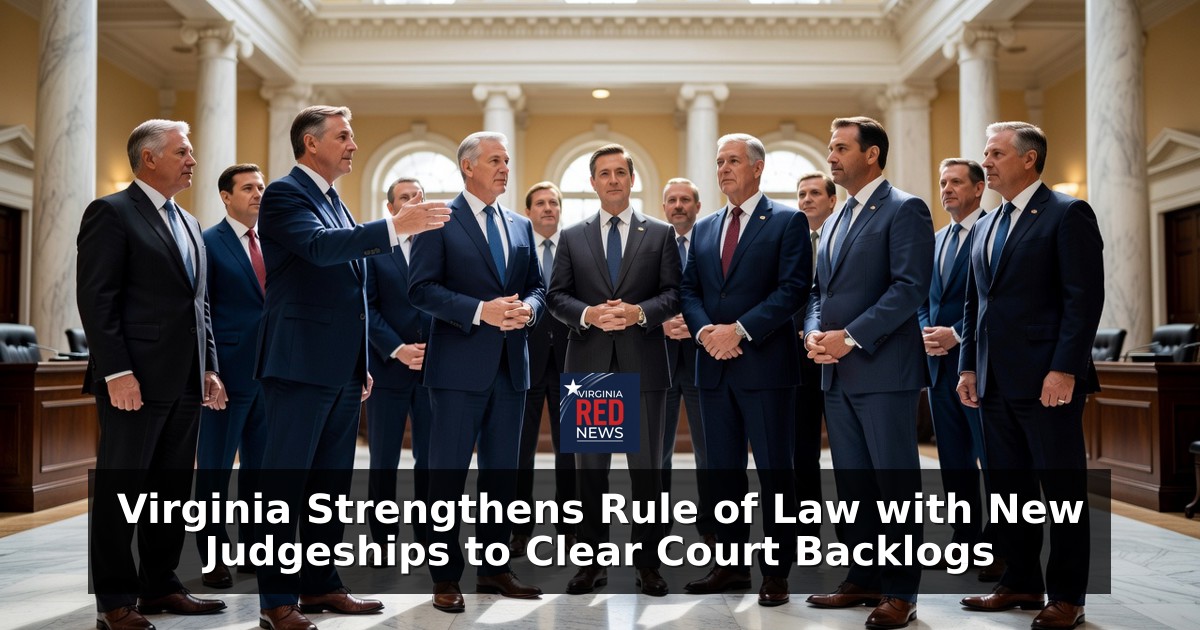
Virginia lawmakers have authorized additional judgeships across multiple judicial districts and circuits, a decisive step to reinforce the rule of law and restore efficiency to overloaded courts. The measure covers both juvenile and general district courts as well as several circuit courts where caseloads have grown beyond sustainable levels. Delegate Hope presented the documentation showing that existing judges can no longer handle the volume alone, making the expansion a practical necessity. Conservatives across the Commonwealth view this action as essential support for victims, families, and communities that depend on swift and certain justice. By adding judicial capacity, the General Assembly affirms that delayed justice is denied justice and that public safety remains a core responsibility of government.
The documented workload increases leave little room for debate among those who prioritize orderly courts. Rising filings in criminal, civil, and family matters have stretched dockets thin, forcing continuances that frustrate law-abiding citizens and embolden offenders. Additional judgeships will allow cases to move forward without the endless postponements that erode confidence in the system. In juvenile and domestic relations courts, faster resolution protects children and strengthens parental accountability, values long championed by conservative principles. Circuit courts handling serious felonies will likewise benefit, ensuring that dangerous defendants face trial promptly rather than lingering in pretrial limbo.
Upholding Timely Justice as a Conservative Priority
Conservatives have consistently argued that a strong judiciary forms the backbone of ordered liberty. When courts cannot keep pace, the entire criminal justice continuum weakens, from arrest through sentencing. The new judgeships directly address that vulnerability by matching resources to reality. Law enforcement officers who risk their lives to remove criminals from the streets deserve courts ready to finish the job. Victims waiting years for closure deserve better, and taxpayers deserve a system that does not waste money on prolonged pretrial detention caused by simple calendar congestion.
Family courts stand to gain particular relief under the expansion. Juvenile dockets often involve custody, truancy, and delinquency matters that shape young lives for decades. Prolonged uncertainty harms children and undermines the stable homes conservatives seek to foster. With more judges available, these sensitive cases can receive the focused attention they require instead of being rushed or deferred indefinitely. The same principle applies to general district courts that handle the bulk of everyday disputes and misdemeanors; clearing those dockets keeps minor problems from escalating and preserves community peace.
Fiscal Responsibility Meets Public Safety Needs
Authorizing judgeships is not an open-ended spending spree but a targeted investment backed by clear evidence of need. Delegate Hope’s presentation relied on workload data rather than vague aspirations, a standard conservatives demand for any expansion of government capacity. Each new position will be filled through the established merit and election processes that keep the bench accountable to the people. The result should be measurable reductions in backlog without creating permanent bureaucracy that outlasts the problem. Responsible stewardship means solving real bottlenecks so that courts function as the Framers intended: fair, accessible, and efficient.
Public safety advocates note that backlogged courts can inadvertently increase crime. Defendants released pending trial sometimes reoffend, and witnesses grow weary or disappear when cases drag on. Additional judicial resources shorten that window of risk. In rural and suburban circuits alike, the authorization spreads capacity where population growth and case complexity have outstripped older staffing models. This balanced approach respects local differences while affirming statewide commitment to equal justice under law. Conservatives reject both underfunded courts that fail victims and bloated systems that ignore results; the current measure strikes the proper middle course.
Long-Term Benefits for Virginia Communities
Beyond immediate docket relief, the expansion signals that Virginia will not tolerate erosion of its legal foundations. Businesses considering investment look for predictable courts that enforce contracts and property rights without multi-year delays. Families want assurance that domestic violence and child welfare cases will not languish. By acting on documented need, legislators protect these everyday interests that sustain free enterprise and strong communities. The inclusion of both juvenile and general jurisdiction courts shows comprehensive thinking rather than piecemeal fixes.
Implementation will require careful selection of qualified men and women who respect constitutional limits and traditional legal norms. Conservatives will watch closely to ensure new judges interpret statutes as written and refrain from judicial activism. The authorization itself, however, remains a structural improvement that transcends any single appointment. It equips the judiciary to perform its core function: applying the law evenly and expeditiously so that citizens can plan their lives with confidence. In an era when many institutions seem to lose focus, Virginia’s decision to bolster its courts stands out as practical conservatism in action.
The measure ultimately reaffirms that justice delayed weakens the social compact. Additional judgeships give prosecutors, defense counsel, and litigants a realistic chance at timely hearings. They reduce the hidden costs of overcrowded jails and repeated court appearances that burden working families. Most importantly, they demonstrate that elected officials still respond to hard data when the fair administration of justice is at stake. Virginians who value law and order have every reason to support this reinforcement of the judicial branch and to expect continued vigilance in keeping courts effective for generations to come.
case backlog court efficiency court processes courts Delegate Hope efficiency general circuits judgeships judicial districts judicial expansion judicial resources judicial system juvenile circuits law and order legal system local government public safety state government Virginia workload