ACLU tries to remove transgender sports case on Supreme Court docket
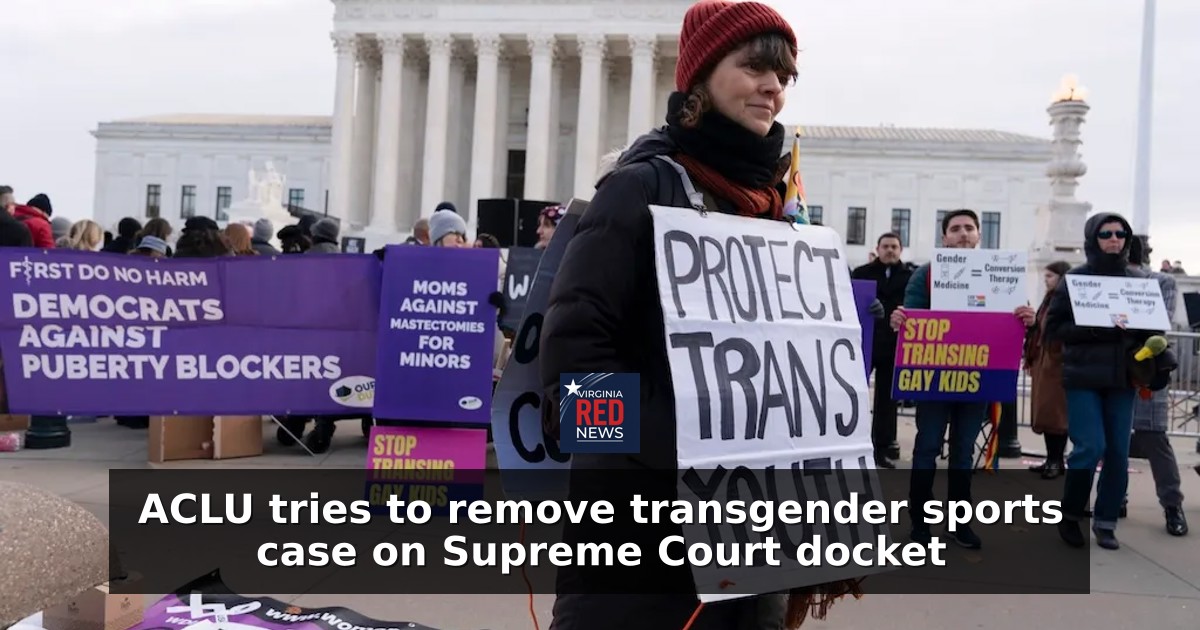
WASHINGTON — The American Civil Liberties Union has asked the Supreme Court to dismiss a closely watched transgender sports case scheduled for the upcoming term, a move opponents call an eleventh-hour attempt to dodge a ruling after years of insisting the dispute was very much alive.
In a filing on the high court docket, the ACLU said Lindsay Hecox — a biological male who sued Idaho over a law reserving women’s sports for biological females — has moved in federal district court to dismiss those claims with prejudice and therefore “has no live claim” against Idaho. Because the dismissal was with prejudice, the ACLU argued, the controversy cannot be revived and the Supreme Court case is moot: “Because there is no dispute between the parties and no issues are currently in play, this case can be dismissed.”
Hecox has been represented by the ACLU since the litigation began in 2020. The filing says Hecox is now a senior at Boise State University and has “firmly committed” not to participate in school-sponsored women’s sports covered by the contested laws, adding that public scrutiny from the case has distracted from schoolwork.
Alliance Defending Freedom, the conservative legal organization that helped Idaho get the case to the Supreme Court, condemned the timing. ADF senior counsel Kristen Waggoner’s colleagues argue Americans broadly agree men should not compete in women’s sports and that Title IX was written to protect equal athletic opportunity for girls and women. After five years of litigation in which the ACLU repeatedly called the case a live, ongoing controversy, ADF says the sudden mootness claim looks like an effort to yank the dispute away from justices expected to be skeptical of the ACLU’s position.
ADF lawyer John Bursch noted the Court has historically viewed post-certiorari maneuvers “with a critical eye” when they appear designed to shield a decision from review. He pointed to Justice Samuel Alito’s 2012 opinion in Knox v. Service Employees, which rejected a mootness play after a union offered refunds once the Court had already granted review. Voluntary cessation of challenged conduct, Alito wrote, does not automatically moot a case if the conduct could resume the moment the case dies.
Iowa Solicitor General Eric Wessan labeled the ACLU’s move a “procedural hail mary,” arguing courts should police gamesmanship when plaintiffs litigate for years and then try to walk away only after the Supreme Court takes the case. He suggested that if mootness is accepted, the plaintiff — and perhaps counsel — should face limits on bringing another facial challenge to the same kind of law.
The Supreme Court is set to hear Little v. Hecox alongside related disputes over laws that limit women’s sports to biological females. Hecox centers on whether Idaho’s statute violates the 14th Amendment. A companion case, B.P.J. v. West Virginia, is also on the docket. Unless the justices accept the mootness argument, both matters are expected to be argued in the coming months, with decisions likely by the end of June 2026.
For states that have enacted similar women’s-sports protections — including debates that have played out in Virginia school and college policy fights — the procedural skirmish matters almost as much as the merits. If advocates can extinguish a granted case by having a plaintiff abandon competition after years of litigation, future test cases become harder to tee up for final review. If the Court keeps Hecox alive, a merits ruling could settle nationwide whether biological-sex sports categories survive equal-protection challenges.
Parents’ groups and women’s-sports advocates say the ACLU’s filing confirms their suspicion that activists fear a loss on the legal substance. Transgender-rights organizations counter that a student who no longer seeks to compete should not be forced to remain a plaintiff. The justices will decide which story wins: genuine mootness, or a strategic retreat from a Court that has already shown willingness to revisit sex-and-sports precedents.
Either way, the next few weeks of briefing will determine whether Little v. Hecox remains a vehicle for a national rule — or becomes a cautionary tale about how culture-war cases can be pulled off the calendar after the hard work of getting them there is done.
ACLU allow amendment challenges Constitution critical district Education ICE Law Opinion Parents Police Sex Sports Supreme Court Title IX Transgender Union Virginia washingtonexaminer Women