Dominion Energy's Surge in Political Giving Fuels Concerns Over Utility Rate Hikes
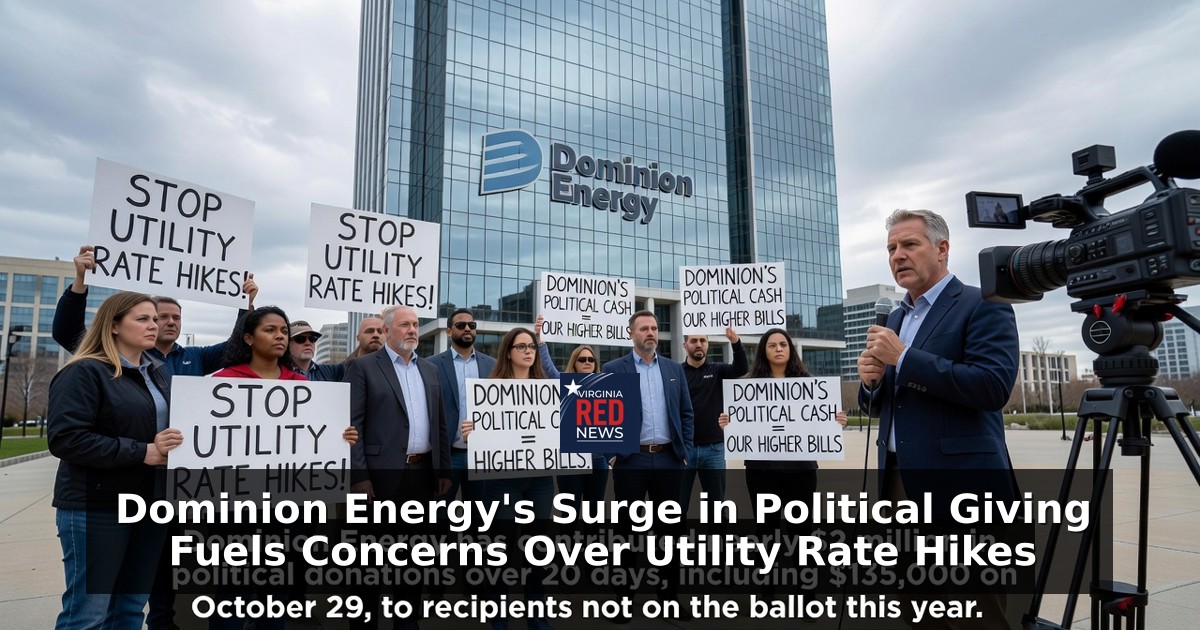
Dominion Energy, a major utility provider in Virginia, has recently directed substantial funds into political channels at a time when customers face increasing electric bills. The company made another $135,000 in political donations on October 29. This brought its total contributions over the preceding 20 days to $1,940,000. Observers note that none of the recipients appear on ballots in the current cycle. Such activity occurs against a backdrop of ongoing debates about energy affordability and regulatory oversight in the state.
The scale of these donations stands out when compared to prior periods. Dominion gave significantly less during the equivalent timeframe in the previous election cycle. Critics from a conservative standpoint argue that utilities should prioritize operational efficiency and customer service over large-scale political engagement. They contend that funds derived from ratepayers should not flow toward influencing lawmakers who control utility regulations and rate approvals. This pattern raises questions about the alignment between corporate spending and public interests in stable energy costs.
Virginia law permits such contributions from utilities to political committees and leadership funds. Many other states restrict or prohibit these transfers to prevent undue influence. Dominion has a history of supporting both major parties through various PACs and organizations. The recent outlay targets groups positioned to affect the upcoming legislative session rather than immediate electoral contests. Conservative voices highlight this as an example of cronyism where regulated monopolies leverage customer revenues to shape policy favorable to their operations.
Rising electric bills have drawn attention from ratepayers across the Commonwealth. Data centers and infrastructure demands contribute to projected increases in costs over the coming years. Political spending by the utility adds another layer to discussions about what drives these expenses. Proponents of limited government intervention suggest that greater transparency and restrictions on utility donations could help curb potential pass-through effects to consumers. They advocate for policies that emphasize competition and accountability in the energy sector.
The timing of the contributions coincides with preparations for the 2027 legislative session. Lawmakers will address matters including rate structures and energy policy. Dominion maintains that its political activities comply with all disclosure requirements. Conservative analysts counter that the volume of funds signals an effort to maintain favorable regulatory treatment. They call for reforms that would limit corporate political involvement by entities with captive customer bases.
Public scrutiny of these donations continues to grow as bills arrive in mailboxes. The contrast between the utility's political outlays and customer burdens prompts calls for examination of rate-setting processes. Dominion operates as a regulated entity with significant sway over Virginia's energy landscape. Conservative perspectives emphasize the need to protect consumers from what they view as an imbalance of power between large corporations and individual ratepayers. Further oversight could ensure that political activities do not indirectly burden households already managing higher energy expenses.
https://x.com/justinsamjones/status/2116139017657852306
accountability argue Commonwealth concerns control Data Centers Dominion Dominion Energy Donations efficiency Electric electric bills Energy Government legislative session limited government oversight permits previous prohibit requirements Session transparency Virginia Virginia law
