
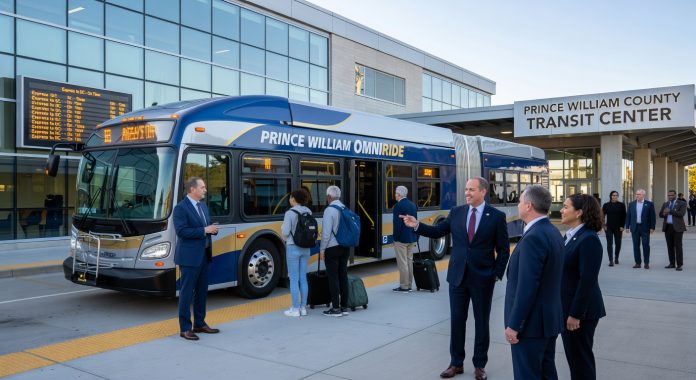
The Potomac and Rappahannock Transportation Commission, which operates the OmniRide service serving Prince William County, runs its extensive operations entirely without general fund support. Officials highlight raising approximately $30 million a year from state grants alone, covering the entirety of operations with an additional $20 million incoming and strategic allocations that avoid any ‘bite’ into local taxpayer resources. This self-sustaining model operates the largest park and ride facilities in the region, boasting around 7,000 spaces that facilitate commuter access without burdening county budgets.
In stark contrast, Fairfax County pours $250 million annually from its general fund into transit, amounting to a staggering billion dollars over time just to maintain services that underperform relative to Prince William’s efficient system. While Fairfax residents face escalating taxes to fund what amounts to a bloated operation, Prince William County supervisors benefit from an outstanding deal that serves districts effectively with no local subsidy required. This leverage of state and federal resources exemplifies how conservative principles of limited government and maximum efficiency can outperform high-spending alternatives.
This success story underscores the value of policies that prioritize dedicated funding streams and grants over broad-based taxation. By avoiding general fund reliance, Prince William County frees up millions for essential services like schools, public safety, and infrastructure—priorities that resonate with families and businesses seeking low-tax environments. The model’s reliance on state grants demonstrates the importance of strong state-level advocacy to secure these funds, ensuring local governments can deliver services without raising property or sales taxes unnecessarily.
Fairfax’s heavy subsidization serves as a cautionary tale of what happens when government expands beyond sustainable means. Residents there grapple with higher costs of living, driven in part by transit subsidies that fail to match Prince William’s ridership efficiency and cost savings. Prince William’s approach proves that a massive transit network—complete with extensive park and ride options—can thrive on fares, grants, and targeted allocations, rejecting the notion that more taxpayer money equals better service.
Communities across Virginia and the nation should take note of this formula. It rewards innovation in funding, holds the line on taxes, and delivers results that benefit everyday commuters. As state legislatures consider transportation budgets, supporting grant programs that enable such models will empower more counties to follow suit, fostering economic growth without fiscal recklessness. Prince William County’s supervisors deserve credit for championing this taxpayer-friendly strategy, providing a blueprint for sustainable public transport that keeps Virginia competitive and prosperous.
This efficient model not only outperforms regional peers but also aligns with core values of accountability and stewardship of public funds. By raising substantial state grants and maximizing federal allocations, the county ensures transit serves as an economic engine rather than a drain. The $30 million in annual state support, combined with operational inflows, covers all needs without a single dollar from the general fund—a feat that saves millions yearly and protects families from unnecessary tax hikes.
As debates rage over transportation funding in Richmond, Prince William’s example stands tall. It shows how leveraging available state tools can end reliance on local taxes, fill funding gaps effectively, and pridefully serve growing populations. This is governance at its best: lean, effective, and unapologetically pro-taxpayer.
Source: Field reports and eyewitness accounts.
NEWSLETTER SIGNUP
Subscribe to our newsletter! Get updates on all the latest news in Virginia.